
Event Wayfinding: The Complete Guide for Organizers
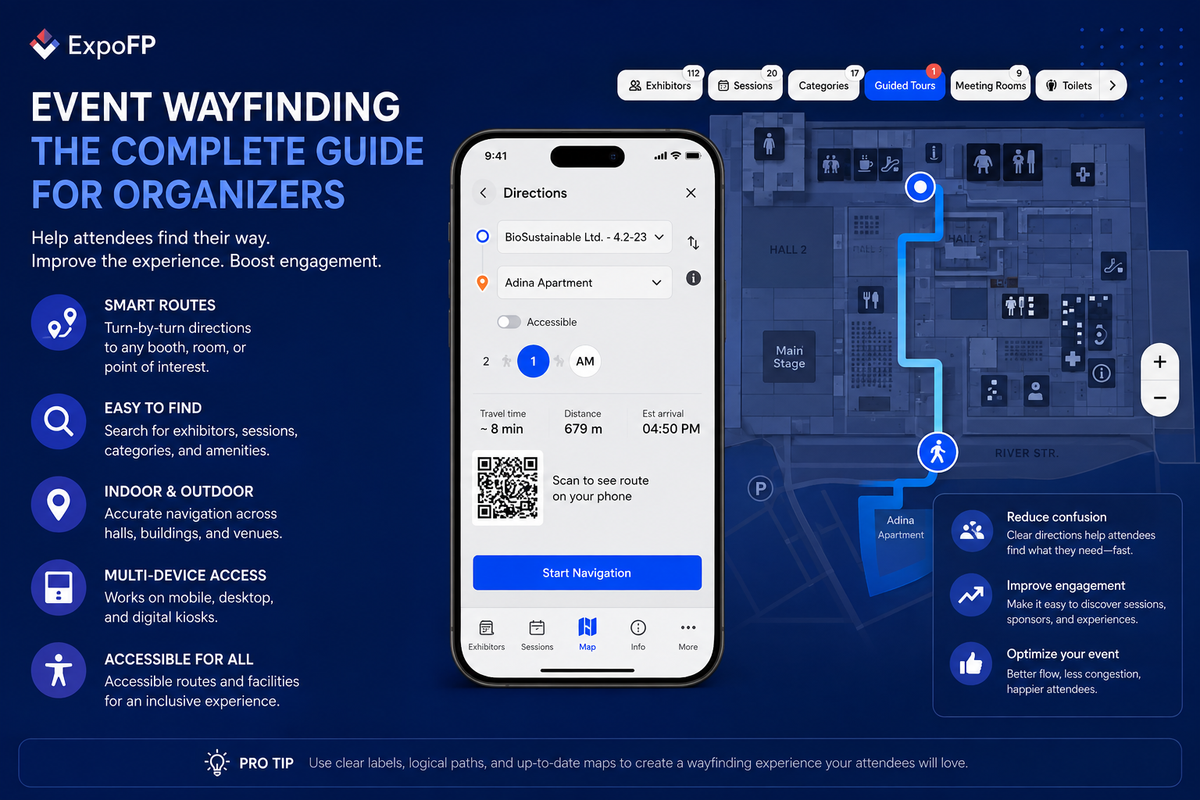
Wayfinding is the system of signage, maps, and digital tools that helps attendees, exhibitors, and staff find their way around a venue — from parking to registration to a specific booth or session room. Good wayfinding is largely invisible: people get where they’re going without thinking about it. Bad wayfinding is the reason your help desk has a line and your session rooms fill up five minutes late.
This guide covers what wayfinding actually includes, how to plan it for events of any size, the physical and digital tools available, and how to avoid the mistakes that cause the most attendee frustration.
What Wayfinding Means for Events
Wayfinding is more than directional signs. It’s the system that helps attendees navigate an event venue quickly and confidently using both physical and digital guidance. At an event, effective wayfinding includes:
- Directional signage from parking, transit, and building entrances to the registration desk
- Hall, aisle, and booth numbering that’s consistent and predictable
- Digital floor plans and mobile maps attendees can search and follow
- Session room and stage signage, including capacity and schedule changes
- Wayfinding for accessibility — routes for wheelchair users, tactile signage, elevators
- Staff and volunteer positioning at key decision points
- Emergency and exit wayfinding, which overlaps with your fire safety and layout planning
Ultimately, effective wayfinding removes friction from the attendee journey, helping people find destinations quickly, confidently, and with fewer decisions along the way.
Why Wayfinding Is a Bigger Deal Than It Looks
Poor wayfinding has measurable downstream effects that organizers often attribute to other causes:
Booth traffic imbalance. Booths near the entrance and main aisles get disproportionate foot traffic, while booths in back corners or behind pillars get overlooked — not because the exhibit is weaker, but because attendees never found a reason to walk that way. Clear wayfinding and a well-marked map spread traffic more evenly across the hall.
Session no-shows and late arrivals. If attendees can’t quickly locate a breakout room in a sprawling convention center, sessions start late or lose attendees who gave up searching. This is especially common at multi-hall venues, where session rooms can be a ten-minute walk from the show floor.
Help desk overload. Every “where is X” question at the info desk is a wayfinding failure. High help-desk volume is a reliable signal that your signage or digital map isn’t doing its job.
Exhibitor dissatisfaction. Exhibitors who feel they got poor booth traffic due to a confusing layout are less likely to rebook next year, regardless of how good the show content was.
Physical Signage: Essential, but Not Enough
Traditional signage helps attendees understand the venue, but it can't provide personalized directions or real-time updates. Digital wayfinding fills that gap with interactive maps, search, and turn-by-turn navigation.
Digital Wayfinding: The Interactive Floor Plan
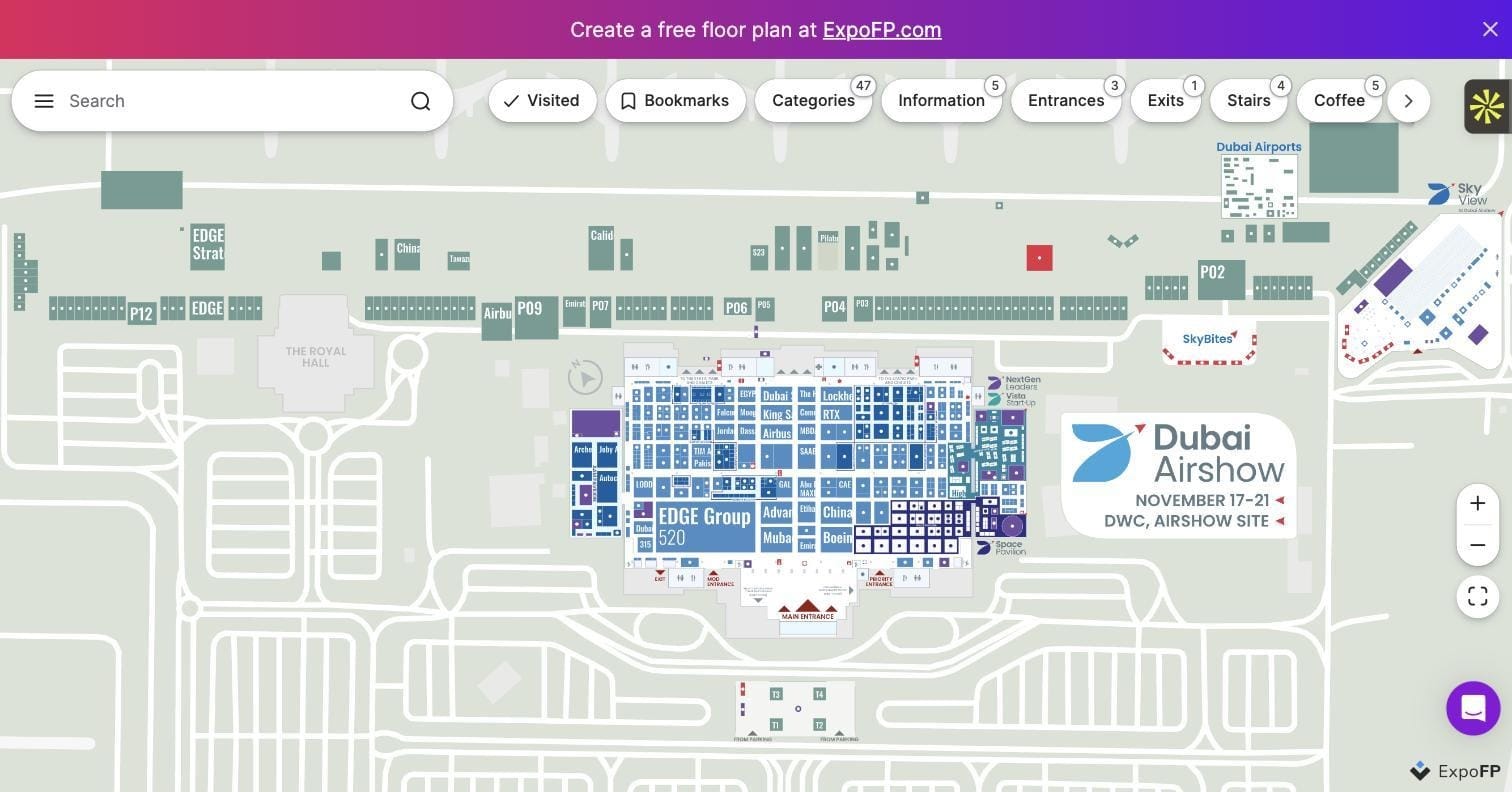
Physical signage gets people to the right neighborhood. A digital, interactive floor plan is what gets them to the exact booth, and it does something signage can’t: it lets attendees plan their route before they even arrive.
What a strong digital wayfinding setup includes:
- Searchable exhibitor and session directory — attendees type a company or topic name and get a pin on the map, not a static list they have to cross-reference manually
- “You are here” positioning on mobile, so attendees orient themselves the moment they open the map
- Category filters — attendees browsing by product category, sponsor tier, or session track see only what’s relevant to them
- Turn-by-turn or path highlighting between the attendee’s location and their destination
- Real-time updates for room changes, booth moves, or closures, without reprinting anything
Because the same floor plan doubles as your booth sales tool (see our guide on how to sell trade show booth space online), building it once and using it for both sales and wayfinding is more efficient than maintaining separate systems. For examples of this in production, browse interactive floor plan examples from real events.
Indoor Navigation Technology: When You Need More Than a Map
For very large venues, a static or even interactive map may not be precise enough for true turn-by-turn navigation. That’s where indoor positioning technology comes in:
Most events don’t need blue-dot GPS-style precision — a well-organized digital floor plan with search and category filters solves 90% of the wayfinding problem at a fraction of the cost and setup time. Beacon-based positioning is worth the investment mainly for venues over roughly 500,000 sq ft (46,000 sq m) or events with heavy repeat-visit patterns where precision navigation becomes a differentiator.
Planning Wayfinding for Different Venue Sizes
Single-hall venues (under 100,000 sq ft / 9,300 sq m). A clear digital floor plan plus standard directional and booth signage is usually sufficient. Focus budget on making the map itself excellent rather than adding navigation technology.
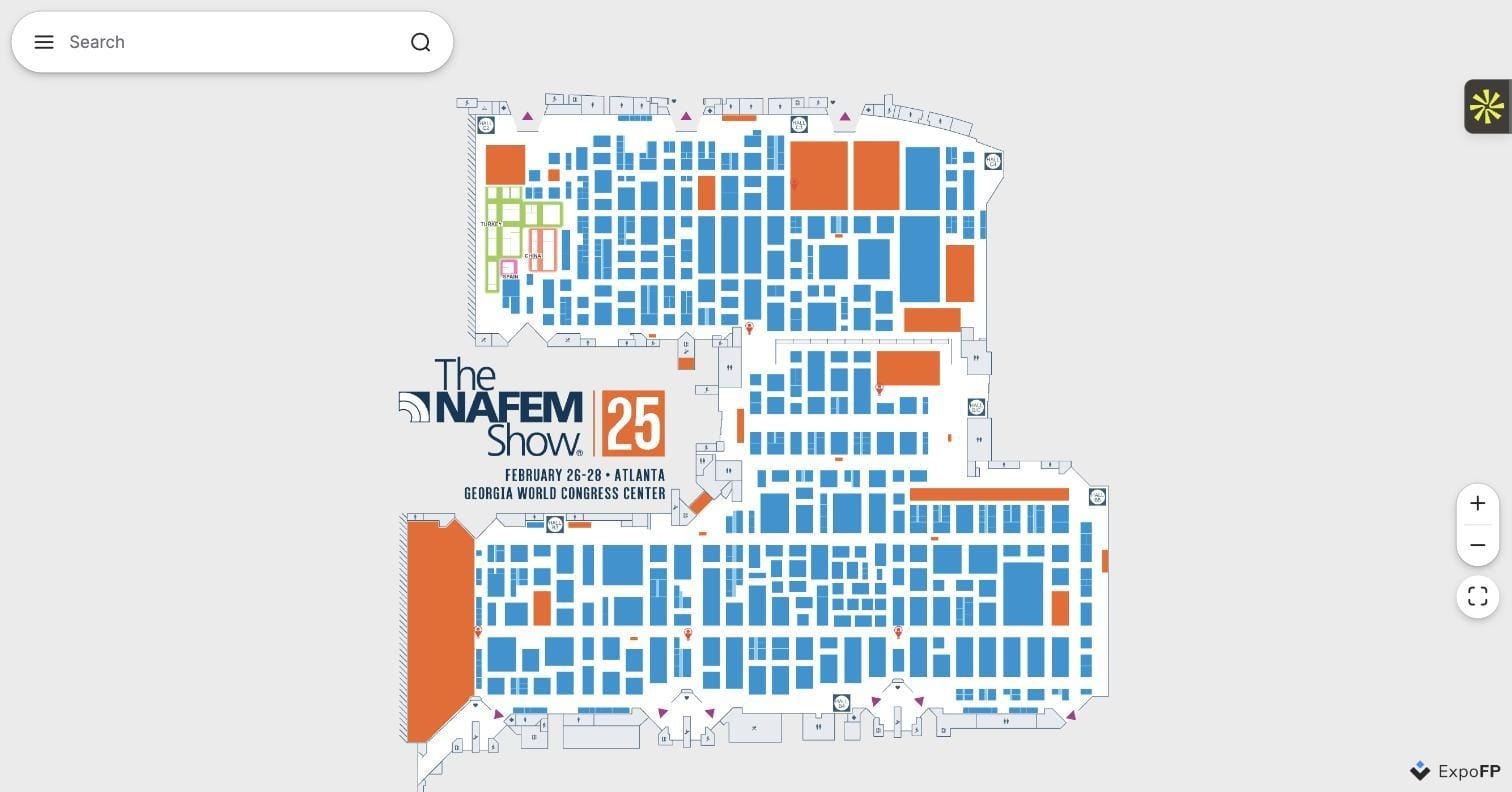
Multi-hall convention centers. Add hall-transition signage and make sure your digital map clearly shows which hall each booth or session lives in — this is the single biggest source of confusion at venues like Messe Frankfurt or McCormick Place. Color-code halls consistently across physical signs and the digital map.
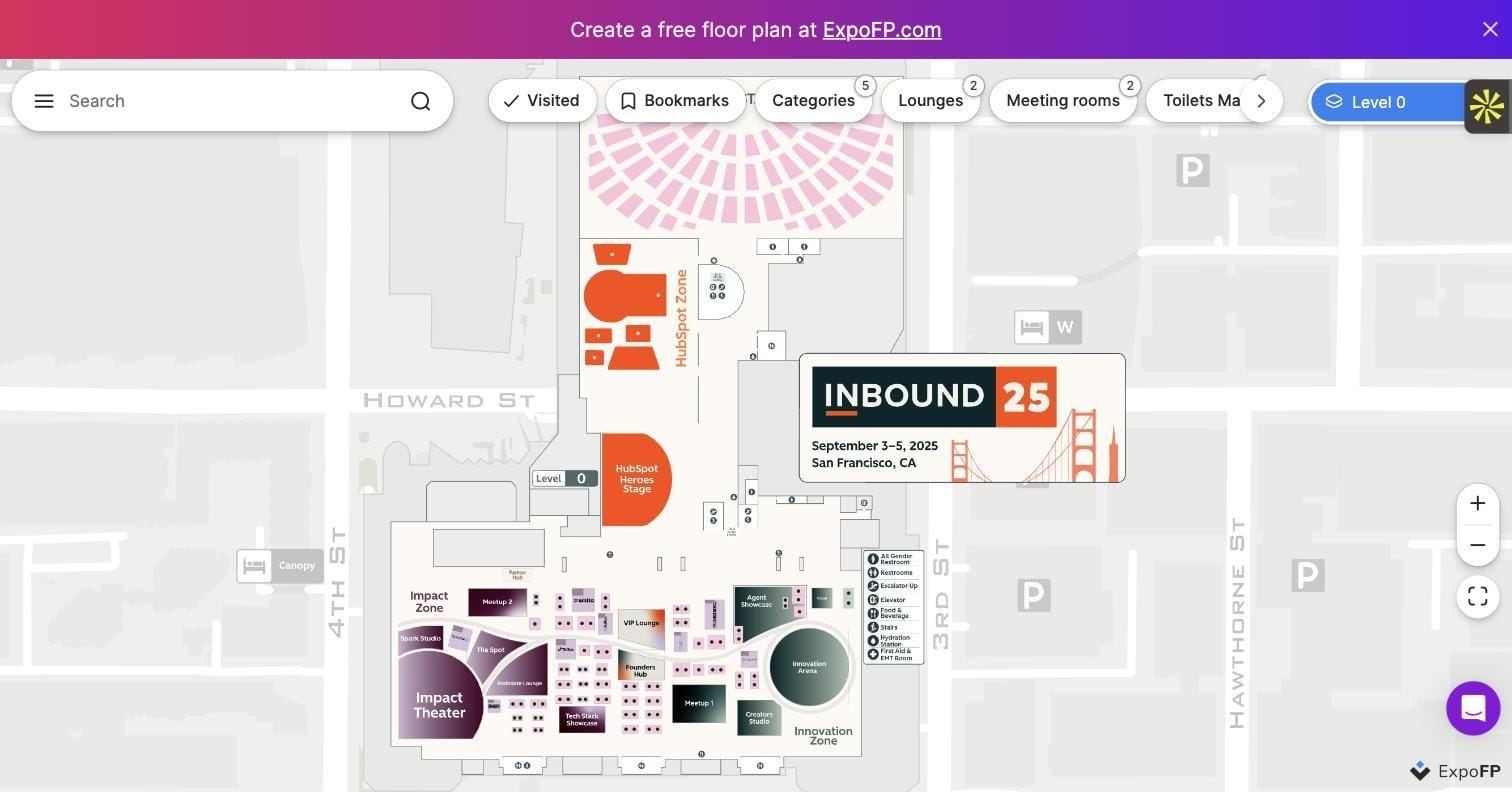
Campus-style or multi-building venues. Outdoor wayfinding (shuttle stops, building-to-building walking routes) becomes as important as indoor navigation. Consider a campus-level overview map in addition to per-building floor plans.
Outdoor and festival-style events. Wayfinding leans more heavily on physical signage and staffed decision points, since GPS often has to substitute for indoor positioning tech. See our guide on [festival map building] for specifics.
A Wayfinding Planning Checklist
- ☐ Map every decision point from parking/transit to registration to booths
- ☐ Confirm booth and aisle numbering matches across signage, program, and digital map
- ☐ Build or update your interactive floor plan with search and category filters
- ☐ Place hanging signage above typical booth-structure height
- ☐ Review accessibility compliance for signage height, contrast, and routes
- ☐ Staff key decision points during peak arrival windows
- ☐ Test the mobile map on-site before doors open, on both iOS and Android
- ☐ Set up a process to push real-time updates (room changes, closures) to the digital map
FAQ
What’s the difference between wayfinding and signage? Signage is one tool within wayfinding. Wayfinding is the full system — physical signs, digital maps, staff positioning, and numbering conventions — that together help someone navigate a space; signage alone rarely solves navigation for a large or multi-hall venue.
Do small events need digital wayfinding, or is signage enough? Even single-hall events under 100,000 sq ft benefit from a digital floor plan, mainly because it lets attendees search for a specific exhibitor or session before they arrive, which physical signage can’t do.
How much does indoor positioning technology cost compared to a digital floor plan? Beacon-based or GPS-precision indoor positioning typically requires hardware installation and ongoing maintenance, making it a larger investment than a digital floor plan alone; most organizers should start with a strong interactive map and add positioning tech only if venue size or repeat-visit patterns justify it.
How do I keep physical and digital wayfinding in sync? Treat the digital floor plan as the source of truth for numbering and location data, and generate or proof physical signage against it — the most common wayfinding failures come from the two falling out of sync after a late booth move.
Does wayfinding matter for virtual or hybrid events? Yes, in a different form — hybrid events need clear digital navigation between virtual session rooms and expo areas, and on-site wayfinding still applies fully to the physical component.
Build Your Wayfinding Around One Live Floor Plan
The most effective wayfinding systems aren’t the ones with the most signage — they’re the ones where the physical signs, the printed program, and the digital map all say the same thing, every time.
Create your floor plan free and see how a single interactive map can anchor wayfinding, booth sales, and attendee search in one place.