
Trade Show Booth Pricing: How to Price Exhibit Space
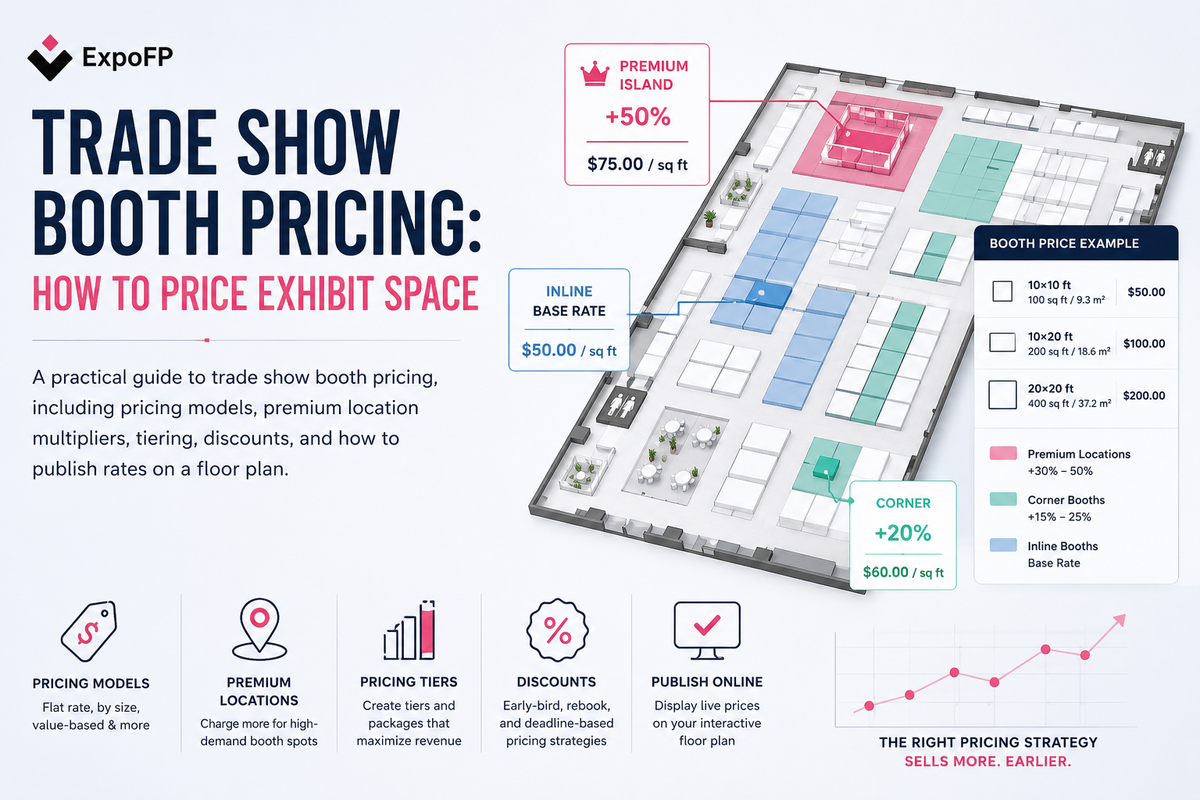
Choosing the right booth pricing strategy is about more than setting a price per square foot. Premium locations, corner booths, sponsorship opportunities, and early-bird discounts all influence revenue and sales velocity.
In this guide, you'll learn how organizers structure trade show booth pricing, when to charge premiums, how to build pricing tiers, and how to present rates so exhibitors can reserve booths with confidence.
The Base Unit: Price per Square Foot (or Square Meter)
Almost all exhibit space pricing starts from a rate per unit of area.
- In the US, space is quoted per square foot, and the standard inline booth is 10×10 ft (100 sq ft / ~9.3 m²).
- In Europe, space is quoted per square meter, and common stand modules run 9–12 m² (~97–129 sq ft).
Your booth pricing becomes simple: a 10×20 ft booth (200 sq ft / ~18.6 m²) costs twice as much as a 10×10, while a 20×20 ft island (400 sq ft / ~37 m²) costs four times as much — before any location premiums are applied. If you need a refresher on standard booth dimensions, see our guide to trade show booth sizes.
There isn't a standard trade show booth price. The right booth pricing depends on your industry, venue costs, target audience, and what similar trade shows charge. A good pricing strategy starts with understanding both your costs and the market.
Calculate your minimum booth price by adding your venue, contractor, marketing, and operational costs, then dividing them by your sellable booth space. Most trade shows can sell only 40–60% of the total exhibition hall, with the remaining space used for aisles, feature areas, and services.
Next, research comparable trade shows. Exhibitors often compare booth prices across similar events, so understanding the market helps you stay competitive while maximizing revenue.
Finally, consider the value of your event. A trade show with a strong reputation, qualified buyers, or high attendance can typically support higher booth prices than a new or smaller event.
Once you've established your base trade show booth price, use corner booth premiums, sponsorship opportunities, pricing tiers, and early-bird discounts to optimize revenue without making your pricing difficult to understand.
Raw Space vs. Package Pricing
The second structural decision: what does the price include?
European organizers lean toward shell-scheme packages priced per square meter; US shows more often sell raw space and let the exhibitor bring their own build. If your show attracts many first-time or international exhibitors, offering at least one all-in package removes the most common source of budgeting shock — and of angry emails in week one.
Location Premiums: Not All 100 Square Feet Are Equal
A booth by the main entrance and a booth in the back corner are different products. Pricing them identically leaves money on the table at the front and inventory unsold at the back. Standard premium factors:
- Corner booths (open on two aisles) — commonly priced at a premium over inlines, or sold with a flat corner fee.
- End-caps and peninsulas (open on three aisles) and islands (open on all four) — command the highest rates per square foot. Our overview of trade show booth types covers the configurations in detail.
- Entrance proximity and main aisles — traffic concentrates along the primary routes between entrances, food, and feature areas.
- Anchor adjacency — space near a major brand’s island or a popular feature (theater, food court, lounge) inherits its traffic.
- Dead zones — far corners, low-ceiling areas, spaces behind pillars. Price them down, or turn them into value with features (seating, charging stations) that pull traffic.
A common approach is zone-based pricing: divide the floor into 2–4 zones (premium / standard / value) and apply a multiplier to the base rate for each. It’s transparent, easy to defend, and easy to draw directly on your floor plan.
Time-Based Pricing: The Early-Bird Ladder
Trade show booth pricing isn't just about the floor plan—it's also about timing. Most organizers use different pricing stages throughout the booth sales cycle to encourage early commitments and maximize revenue.
- On-site rebooking: The lowest booth price, available only to current exhibitors who reserve space during the event. This helps secure renewals before the sales cycle begins.
- Early-bird pricing: A discounted rate offered for a limited time after the event to encourage early booth reservations.
- Standard pricing: The regular trade show booth price used throughout most of the sales period.
- Late pricing: Some organizers increase booth prices as the event approaches, while others offer last-minute discounts to fill remaining space. Be cautious with frequent discounts—exhibitors often compare prices and may delay purchasing if they expect lower rates later.
Whatever pricing strategy you choose, keep it consistent. A clear, transparent rate structure builds trust with exhibitors and makes booth sales easier to manage.
Beyond Space: What Else Goes on the Invoice
Booth pricing rarely stands alone. Typical additional line items:
- Corner/configuration fees where premiums aren’t zone-based
- Required exhibitor fees — marketing fee, listing fee, badge allotments beyond the included count
- Sponsorship bundles — space + branding packages at Gold/Silver/Bronze tiers
- Upgrades — priority placement in the online exhibitor directory, logo on the floor plan, featured search results
That last group is worth attention: digital placements on the event map and directory are high-margin inventory that costs you nothing to manufacture. Money20/20, for example, sells against a fully interactive map where sponsors’ branded islands dominate the floor visually.
Publishing Prices: From PDF Rate Card to Live Floor Plan
However you structure rates, exhibitors experience your pricing through your sales process. The traditional flow — PDF floor plan, emailed rate card, spreadsheet of holds, phone calls to confirm availability — creates friction at exactly the moment someone wants to give you money.
The modern flow puts prices on a live interactive floor plan:
- Every available booth shows its size, configuration, and price (or price band) on click.
- Availability is live — sold and held booths are marked, so nobody requests space that’s gone.
- Exhibitors select and apply/book directly from the map, on any device.
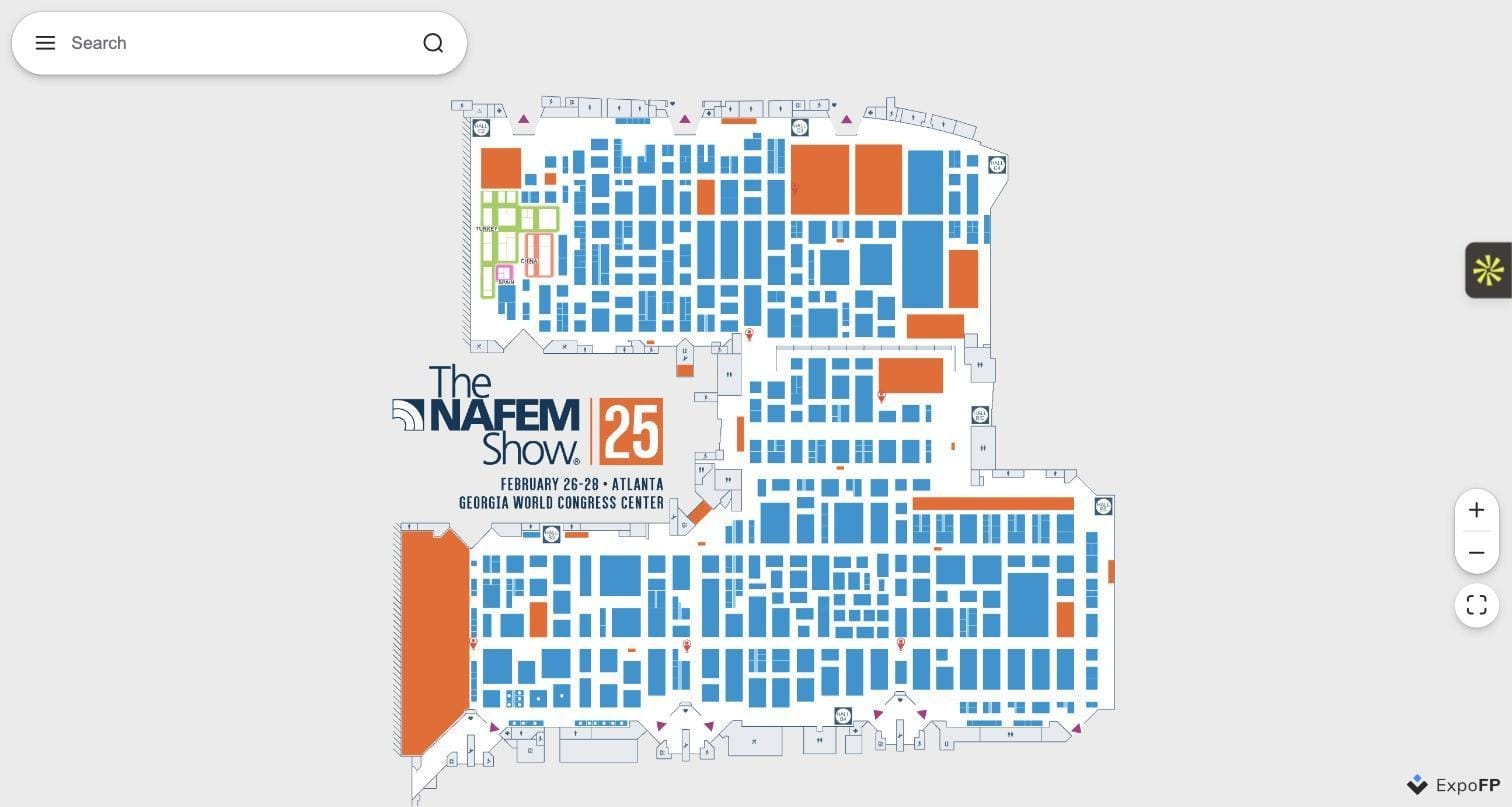
- Zone pricing becomes visually obvious — premium zones can even be color-coded.
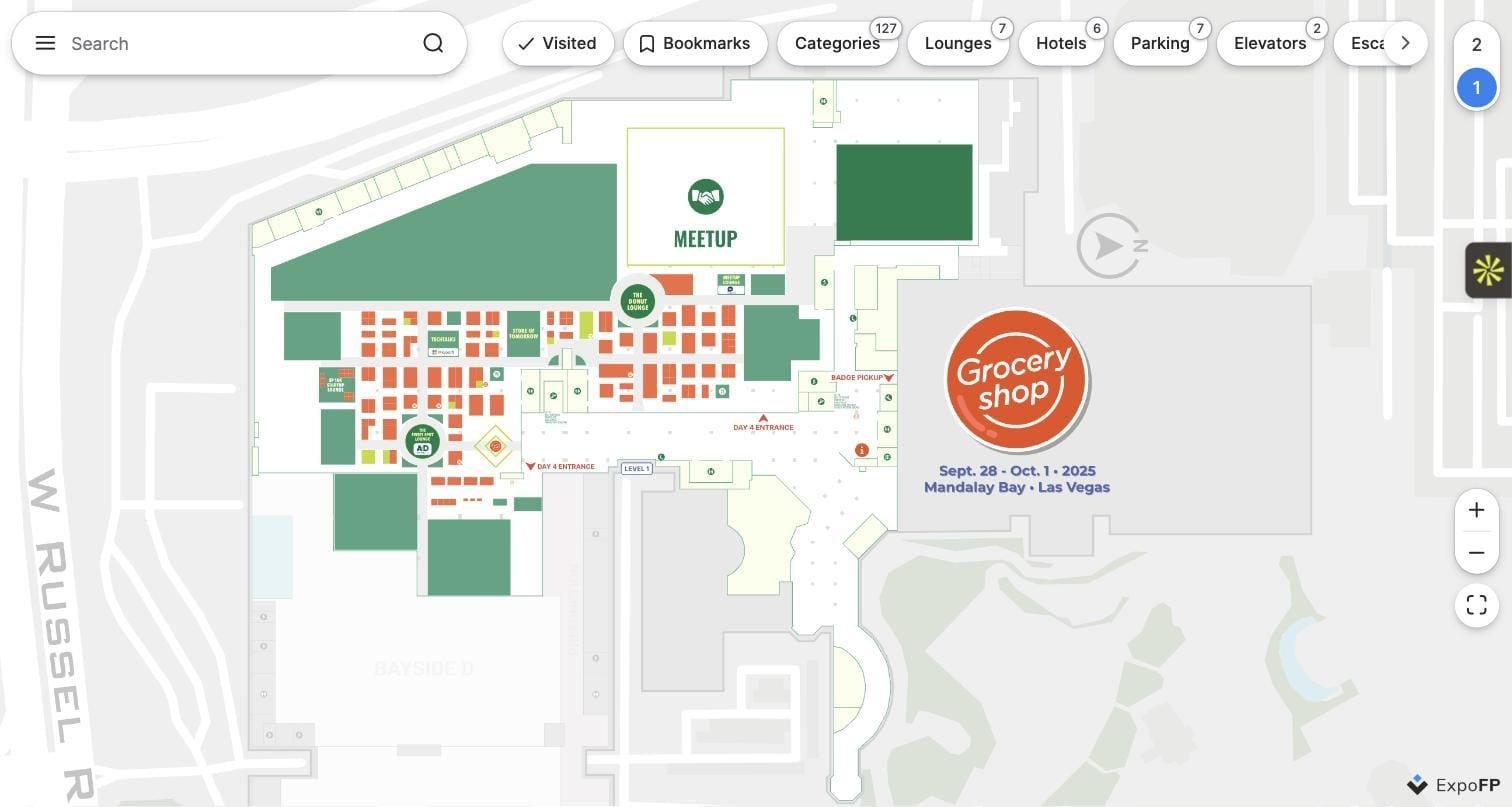
We covered the full workflow — inventory setup, applications, holds, and payments — in our guide on how to sell trade show booth space online. The short version: transparent map-based pricing shortens sales cycles because it answers the three questions every prospect asks (where, how big, how much) before they ever contact you.
With ExpoFP, you draw the floor plan, assign prices and statuses per booth, and take bookings straight from the map; browse live examples or try the interactive demo to see it from the exhibitor’s side.
A Worked Example (Structure, Not Real Rates)
To make the mechanics concrete, here’s how a fictional mid-size US show might structure its card — the structure is the takeaway, not the numbers, which you should set from your own costs and market:
Every element of that table can be represented directly on an interactive floor plan, which is what makes it enforceable: the map is the rate card.
Pricing Checklist for Organizers
- ☐ Calculated break-even rate from total costs ÷ net sellable area
- ☐ Benchmarked 3–5 comparable shows
- ☐ Chosen raw space, package, or hybrid model
- ☐ Defined zones and premiums (corners, entrances, islands)
- ☐ Built the time ladder: rebook → early-bird → standard
- ☐ Priced digital upsells (directory placement, map branding)
- ☐ Published prices on a live floor plan with real-time availability
- ☐ Set discount policy in writing — and stuck to it
Ready to put prices on your map? Create your floor plan free →
FAQ
How is trade show booth space priced?
Booth space is priced per square foot in the US and per square meter in Europe, with a base rate multiplied by booth size, then adjusted for location (corners, entrances, islands), timing (early-bird vs. standard), and what’s included (raw space vs. shell-scheme package).
Why do corner booths cost more?
Corner booths are open to two aisles instead of one, which roughly doubles walk-by exposure and sightlines. Organizers typically charge a percentage premium or a flat corner fee for them.
Should organizers publish booth prices publicly?
Transparent pricing on a live floor plan shortens sales cycles: exhibitors can see location, size, availability, and price in one place and commit faster. Hiding rates behind “contact us” adds friction and pushes smaller exhibitors toward shows that publish.
What’s the difference between raw space and shell scheme pricing?
Raw space is floor area only — the exhibitor pays separately for structure, carpet, power, and services. A shell scheme (standard in Europe) bundles walls, fascia, carpet, and lighting into one per-square-meter price, making total cost predictable for smaller exhibitors.
How do early-bird booth rates work?
Organizers offer the lowest rate to exhibitors who rebook on-site at the current show, a discounted early-bird rate for a defined window afterward, and a standard rate for the rest of the cycle. The ladder rewards early commitment and helps the organizer forecast revenue.