
Event Sponsorship Packages: Ideas, Tiers and Pricing Examples
Event sponsorship packages combine branding, activation opportunities, and audience exposure into packages that organizers can sell alongside exhibit space. Most events offer three to five sponsorship tiers — such as Platinum, Gold, Silver, Bronze, or Title/Presenting/Supporting — with benefits increasing at each level. These can include logo placement, speaking opportunities, branded lounges, app visibility, naming rights, and prominent placement on the event floor plan.
Sponsorship and booth sales are both important event revenue streams, but they serve different purposes. A booth gives an exhibitor physical space to showcase products, meet attendees, and generate leads. An event sponsorship provides broader brand exposure and association with the event itself.
The two increasingly overlap on the show floor. Sponsors may have branded lounges, stages, charging stations, entrances, or other activations that become part of the attendee experience and need to be represented on the floor plan. For organizers, this creates additional opportunities to sell high-value visibility without treating every piece of floor space like standard booth inventory.
The key is to price sponsorship based on the value and exposure it provides, not simply on the amount of space it occupies. A sponsored stage, for example, may take up less space than several booths but deliver significantly more visibility through signage, programming, and attendee traffic.
What’s typically included in an event sponsorship package?
Most sponsorship packages combine benefits from a few key categories, with higher tiers offering more visibility and more valuable opportunities:
Brand visibility — logo placement on the event website, signage, emails, event apps, printed materials, and other attendee-facing channels. Higher sponsorship tiers typically receive more prominent placement or dedicated branding opportunities.
Content and event exposure — speaking opportunities, sponsored sessions, panel participation, or naming rights for stages and other event features. Because these opportunities are limited, they are often reserved for higher sponsorship levels.
Physical activation space — branded lounges, stages, charging stations, demo areas, pavilions, or other sponsored spaces. These activations can also become part of the event floor plan, giving attendees a clear location to find and interact with the sponsor.
Digital visibility and engagement — sponsors may also receive additional exposure through exhibitor profiles, event communications, links, or other digital placements, depending on how the organizer structures the package.
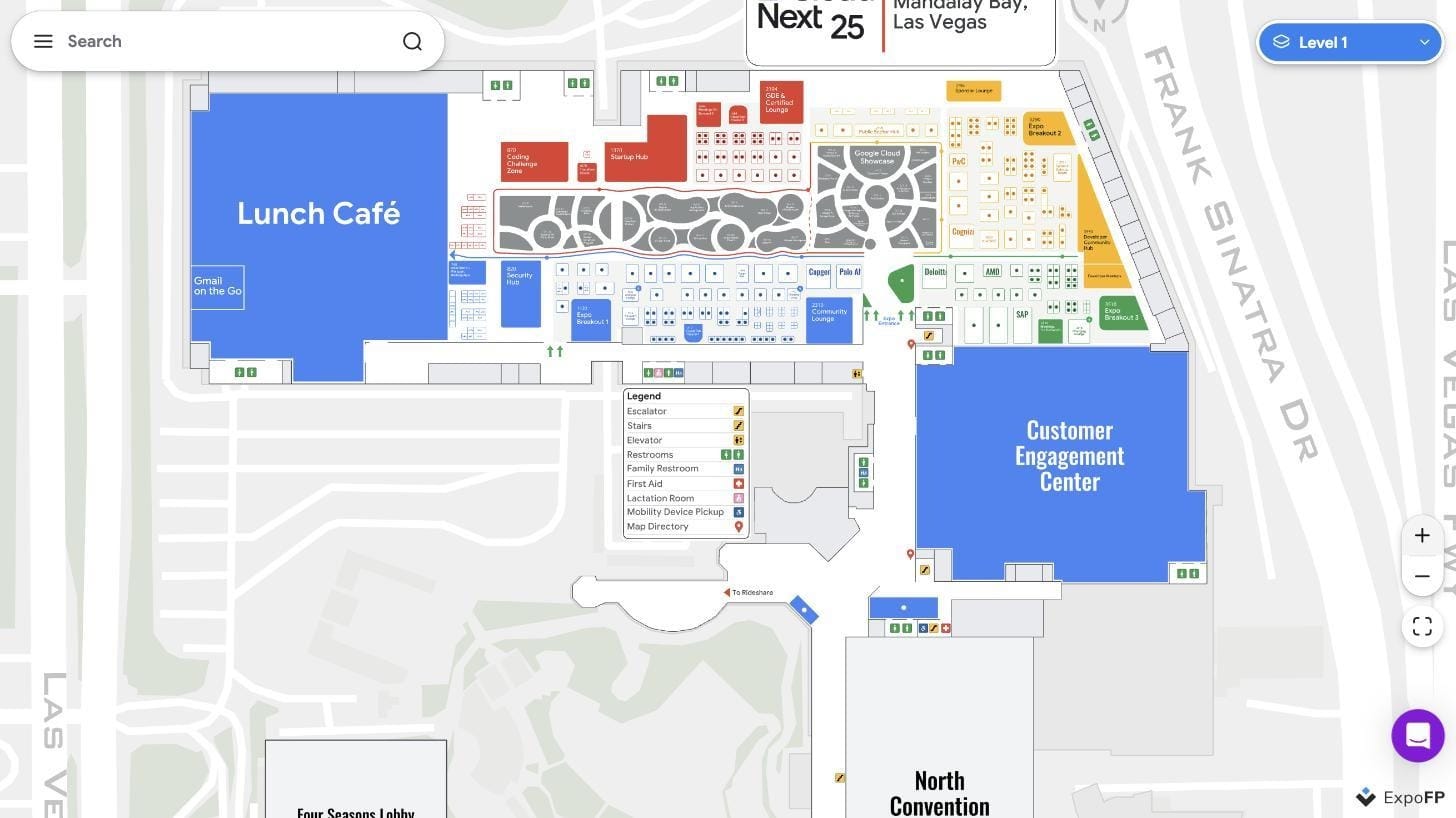
For organizers using an interactive floor plan, sponsorship opportunities can extend beyond traditional logo placement. Sponsored spaces and other points of interest can be clearly labeled on the map, helping attendees discover them while giving sponsors additional visibility throughout the event experience.
Common sponsorship tier structures
| Tier | Typical benefits | Relative pricing |
|---|---|---|
| Title / Presenting | Event name association, highest-level brand visibility, prominent sponsored areas, and exclusive opportunities | Highest — often limited to one sponsor |
| Platinum | Premium logo placement, prominent branded space or activation, and additional event exposure | High |
| Gold | Enhanced logo visibility, branded activation opportunities, and additional digital or event promotion | Mid-high |
| Silver | Logo placement, digital visibility, and smaller sponsorship or activation opportunities | Mid |
| Bronze / Supporting | Basic logo placement and recognition across selected event channels | Entry-level |
The names and benefits of sponsorship tiers vary from event to event. A small conference may offer a few simple branding packages, while a large trade show may combine digital promotion with sponsored lounges, stages, entrances, meeting areas, and other physical activations.
Pricing varies just as widely. Rather than copying sponsorship prices from another event, organizers can look at comparable events in their industry and consider factors such as attendance, audience profile, expected visibility, exclusivity, and the value of each sponsorship opportunity.
For sponsorships connected to physical spaces, the event floor plan can also become part of the package. Sponsored areas can be labeled and made easy for attendees to find, adding visibility while helping organizers integrate sponsorships naturally into the event experience.
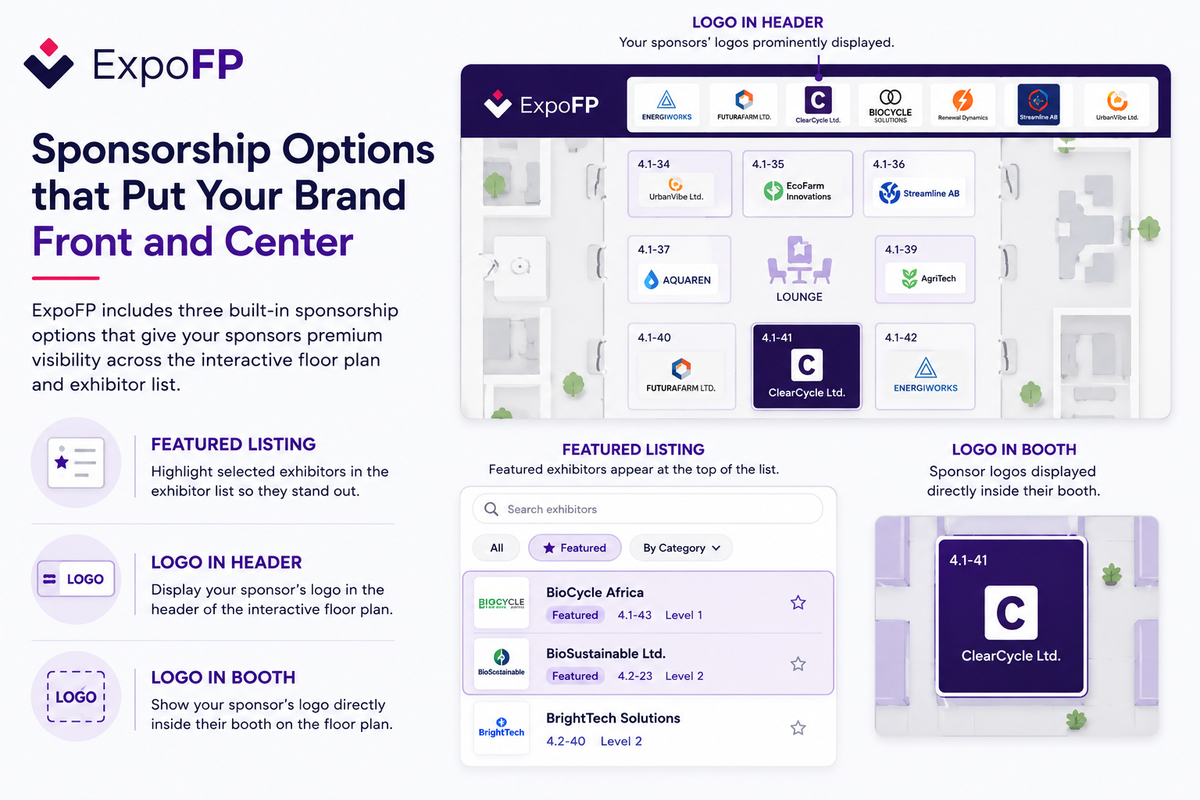
ExpoFP includes three sponsorship options by default that organizers can use to give exhibitors additional visibility on the interactive floor plan and exhibitor list:
- Featured Listing — gives selected exhibitors greater visibility in the exhibitor list.
- Logo in Header — displays the sponsor’s logo in the header of the interactive floor plan.
- Logo in Booth — displays the exhibitor’s logo directly inside their booth on the floor plan.
Organizers are not limited to these default options. They can create additional Listing Levels and customize the features available to exhibitors at each level. This makes it possible to build sponsorship tiers around the event’s own packages and control what exhibitors can access or display on the platform at each sponsorship level.
Sponsorship package ideas beyond the standard tier
Lounge or hub sponsorship. A branded space — a coffee lounge, a charging hub, a relaxation area — gives the sponsor a physical presence and dwell time with attendees without requiring them to staff a full booth. This works well for sponsors who want visibility but don’t sell directly to the audience.
Wayfinding sponsorship. Branded map pins, a sponsored “You Are Here” kiosk, or a sponsored route on the interactive floor plan puts a sponsor’s name in front of every attendee who checks the map — which, on most shows, is a large share of total attendance. Because wayfinding tools get repeat use throughout the event (unlike a banner seen once), this inventory often outperforms static signage on a cost-per-impression basis.
Session or track sponsorship. A sponsor’s name attached to an entire content track (“AI Track presented by [Sponsor]”) extends visibility across every session in that track, not just one talk.
App or digital sponsorship. Splash screen placement, push notification sponsorship, or a sponsored search result on the event app and floor plan search.
Experiential activations. Product demo pods, a photo booth, a game or contest tied to a booth crawl — these work best mid-tier because they require attendee opt-in engagement rather than passive visibility, and they generate the kind of lead data sponsors value most.
Pricing sponsorship packages: a practical approach
Start by assigning a value to each sponsorship benefit before combining them into packages. Logo placement, branded spaces, speaking opportunities, digital visibility, and other benefits provide different levels of exposure, so pricing them individually makes it easier to build sponsorship tiers with a clear difference in value.
Once those benefits are defined, organizers can bundle them into event sponsorship packages. Higher tiers can combine premium visibility with more prominent branding opportunities, while lower tiers offer a smaller set of benefits at a more accessible price. Offering selected benefits à la carte can also give sponsors more flexibility without changing the structure of the main packages.
When setting event sponsorship pricing, consider your own audience size, attendee profile, event format, and expected exposure. A regional conference with 500 attendees will naturally have different sponsorship values than a national trade show with 20,000 attendees, so comparable events in the same industry are usually a better benchmark than events based on size alone.
It can also be useful to keep some premium sponsorship opportunities available later in the sales cycle. High-visibility options such as sponsored lounges, stages, entrances, or other prominent areas may become more valuable as the event approaches. On an interactive floor plan, these sponsored spaces can also be clearly labeled and positioned where attendees can easily discover them.
Putting sponsorships on the floor plan
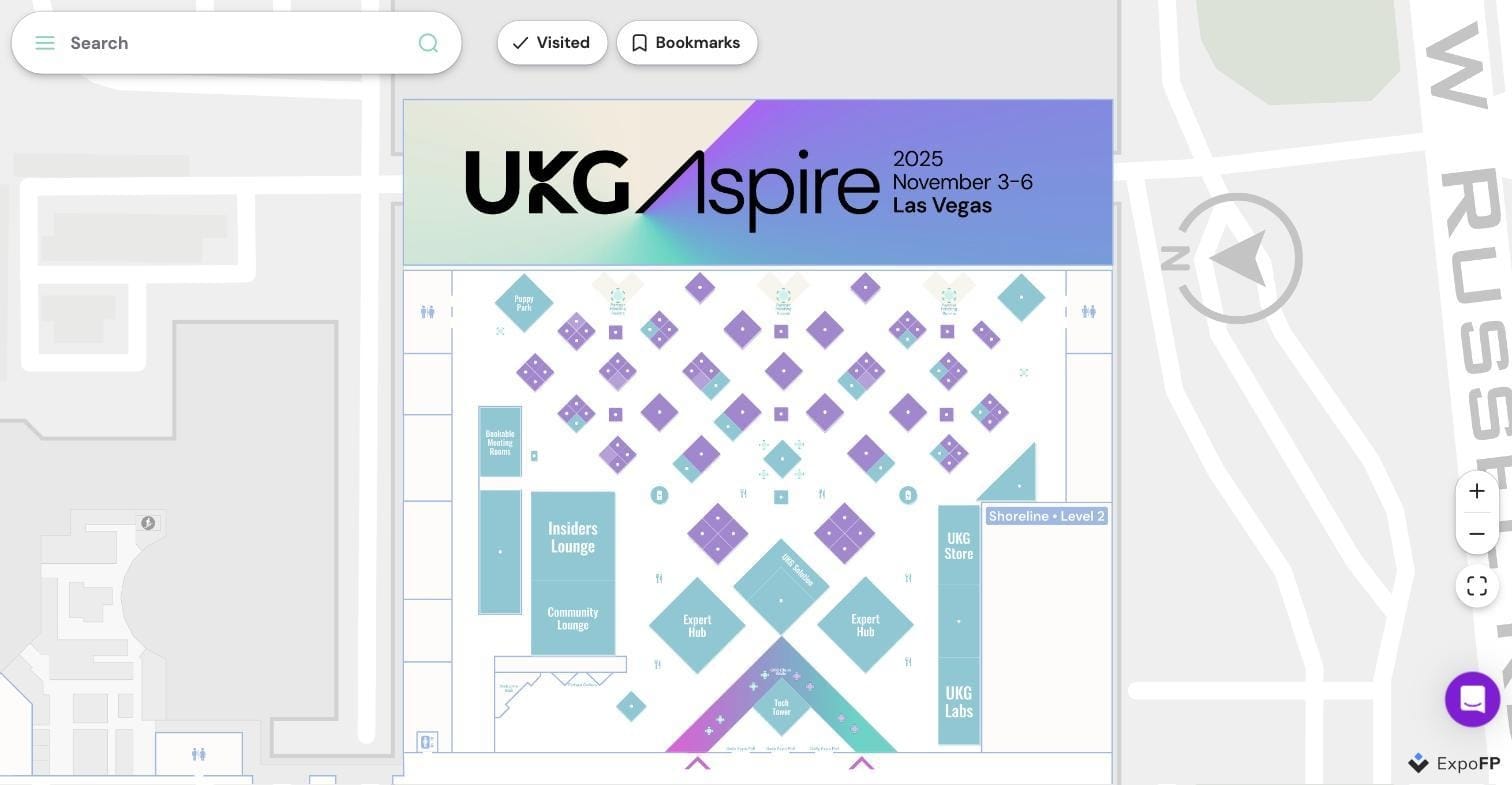
A sponsorship that isn’t visible on the map underperforms, because attendees navigate the show through the floor plan whether they’re looking for an exhibitor or a sponsor lounge. Sponsor activations should be added to the interactive floor plan the same way exhibitor booths are — with a name, a category, and search visibility — so a sponsor’s investment gets the same discoverability as a paying exhibitor. This also gives organizers a second monetizable layer on top of standard booth sales: selling booth space online and selling sponsorship visibility on the same map turn one floor plan into two revenue streams instead of one.
Decide where sponsorship planning fits in your overall show timeline early — sponsorship packages typically need to be finalized before booth sales open, since premium sponsor locations often overlap with premium booth real estate and both can’t be sold twice. This should happen during the same phase you build your floor plan, not as an afterthought once the exhibit hall is already sold out.
Sponsorship package checklist
- List every available benefit (visibility, content, activation space, data) and price each individually
- Build 3–5 tiers as a bundled discount off component pricing, not arbitrary round numbers
- Reserve a portion of top-tier inventory instead of selling all of it in the first push
- Assign every physical activation a name, category, and location on the interactive floor plan
- Finalize sponsorship inventory before opening general booth sales
- Set a hard deadline for logo and asset submission so signage and app placements ship on time
- Track which sponsorship benefits actually get used (app clicks, lounge foot traffic) to inform next year’s pricing
FAQ
How many sponsorship tiers should an event have? Three to five is typical. Fewer than three makes it hard to differentiate value; more than five tends to create confusing overlap between adjacent tiers and slows down sales conversations.
Should sponsorship and booth sales use the same floor plan? Yes. Keeping sponsor activations and exhibitor booths on one interactive floor plan means attendees search and navigate to both the same way, and organizers manage one inventory system instead of two disconnected ones.
What’s the difference between a Title sponsor and a Presenting sponsor? A Title sponsor’s name is typically built into the event’s own name (“[Company] presents [Event]” or “[Event] powered by [Company]”); a Presenting sponsor gets top-tier visibility without the event being renamed around their brand. Which structure an event uses is a naming and contract decision, not a fixed industry standard.
How early should sponsorship sales start relative to the event date? Most organizers open sponsorship sales 9–12 months ahead of large annual shows, well before general booth sales, since top-tier sponsors often need internal budget approval cycles that run far longer than an individual exhibitor’s purchase decision.
Can small or regional events sell sponsorship packages, or is this only for major trade shows? Sponsorship works at any event size — a 200-person regional conference can sell a coffee-cart sponsorship or a lanyard sponsorship for a few hundred dollars just as a national show sells a six-figure Title package. The structure scales down; the logic doesn’t change.
Ready to put sponsor activations on a searchable floor plan alongside your exhibitors? Create your floor plan free and give every sponsor the same visibility your paying exhibitors get.