
Exhibitor Prospectus: What to Include (+Free Template)
Learn what to include in an exhibitor prospectus, from audience data and booth pricing to sponsorship opportunities, floor plans and booking details. Plus, use our free exhibitor prospectus template to create your own.
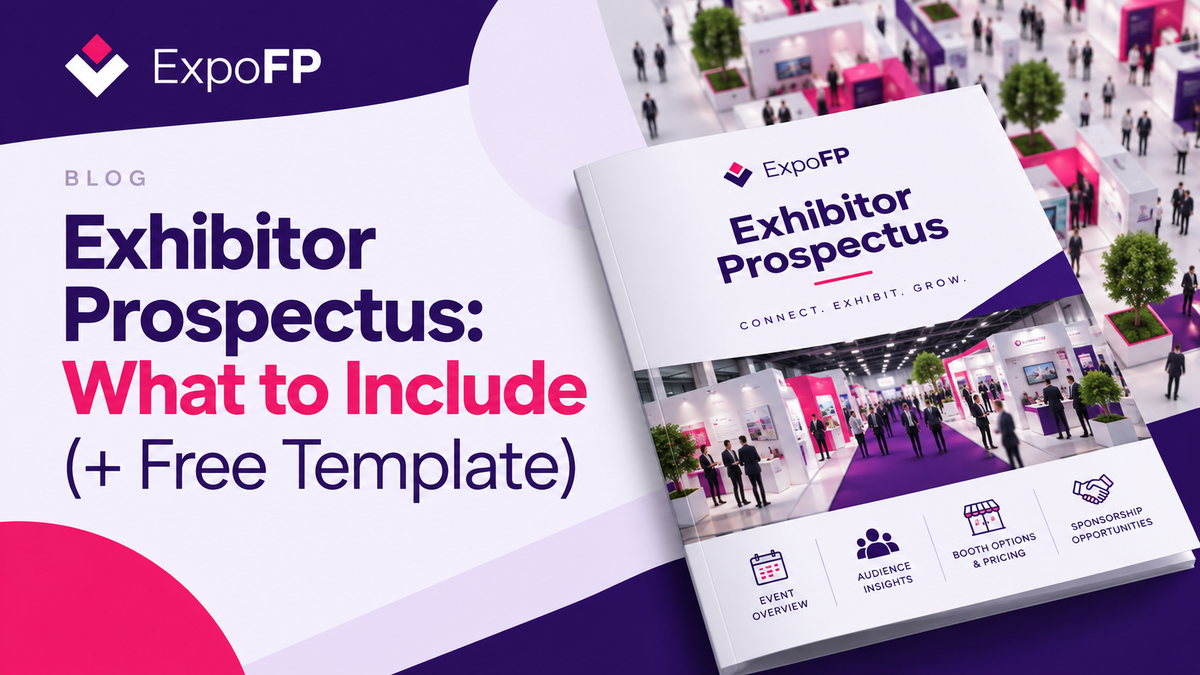
An exhibitor prospectus gives potential exhibitors and sponsors the information they need before booking space at your event. It usually includes who attends the event, booth and sponsorship pricing, what is included, important deadlines, and how to book.
A clear exhibitor prospectus can also save your team time by giving exhibitors the information they need in one PDF or web page instead of answering the same questions individually.
In this guide, we’ll cover the 12 sections to include in an exhibitor prospectus, examples of how events present pricing and floor plans, and a free exhibitor prospectus template you can use for your own event.
Who reads an exhibitor prospectus?
An exhibitor prospectus usually needs to work for two different readers.
The exhibit or event manager is looking for practical information. They’ll want reliable attendance numbers, available booth locations, clear pricing, and a list of what is included so they can evaluate the cost of exhibiting.
According to CEIR’s 2026 Marketing Spend Decision Report, B2B exhibiting accounts for 40.8% of exhibitor marketing budgets, making it an important investment for many companies.
The person approving the budget, such as a marketing VP, sales director, or CFO, may be looking for a quicker overview. Audience information, pricing, and examples of companies already exhibiting are usually the most relevant details for them.
Keep the main information near the beginning of your exhibitor prospectus, followed by the details an event manager may need. You can also link to your interactive floor plan so both readers can check current booth availability.
The 12 sections of an exhibitor prospectus
1. Cover and event overview
Start with the basic information about your event:
- Event name and year
- Dates
- Venue and city
- Expected attendance
- Expected number of exhibitors
- Interactive floor plan
- Booking deadline
- Early-bird deadline, if applicable
This gives potential exhibitors the main information about your event before they continue through the prospectus.
2. Why exhibit: your audience
For many exhibitors, the audience is one of the main factors when deciding whether to participate.
Include useful attendee information such as:
- Total attendance from the previous edition
- Job titles and purchasing authority
- Company types and sizes
- Industries represented
- Domestic and international attendance
- Top countries represented
- Attendance growth over previous editions
- Audited attendance figures, when available
Try to use specific numbers instead of general statements.
For example, “Over 60% of attendees have final or joint purchasing authority (2025 post-show survey, n=1,240)” gives an exhibitor more useful information than simply saying that the event attracts decision-makers.
For more ideas on using audience information to sell booth space, read How to attract more exhibitors to your trade show.
3. Previous exhibitors
Show potential exhibitors which companies have participated in your event before.
You can include logos of returning exhibitors, renewal rates, and short testimonials with the exhibitor’s name and company.
If exhibitors can rebook during the event, you can also show the percentage that does so. This gives prospective exhibitors additional context about how existing exhibitors respond to the event.
4. Floor plan and booth availability
Include an image of your floor plan and a link to the live interactive version.
A static PDF floor plan can quickly become outdated as booths are booked. An interactive floor plan lets potential exhibitors check current availability, see neighboring exhibitors and different areas of the event, and, if enabled, book available booths online.
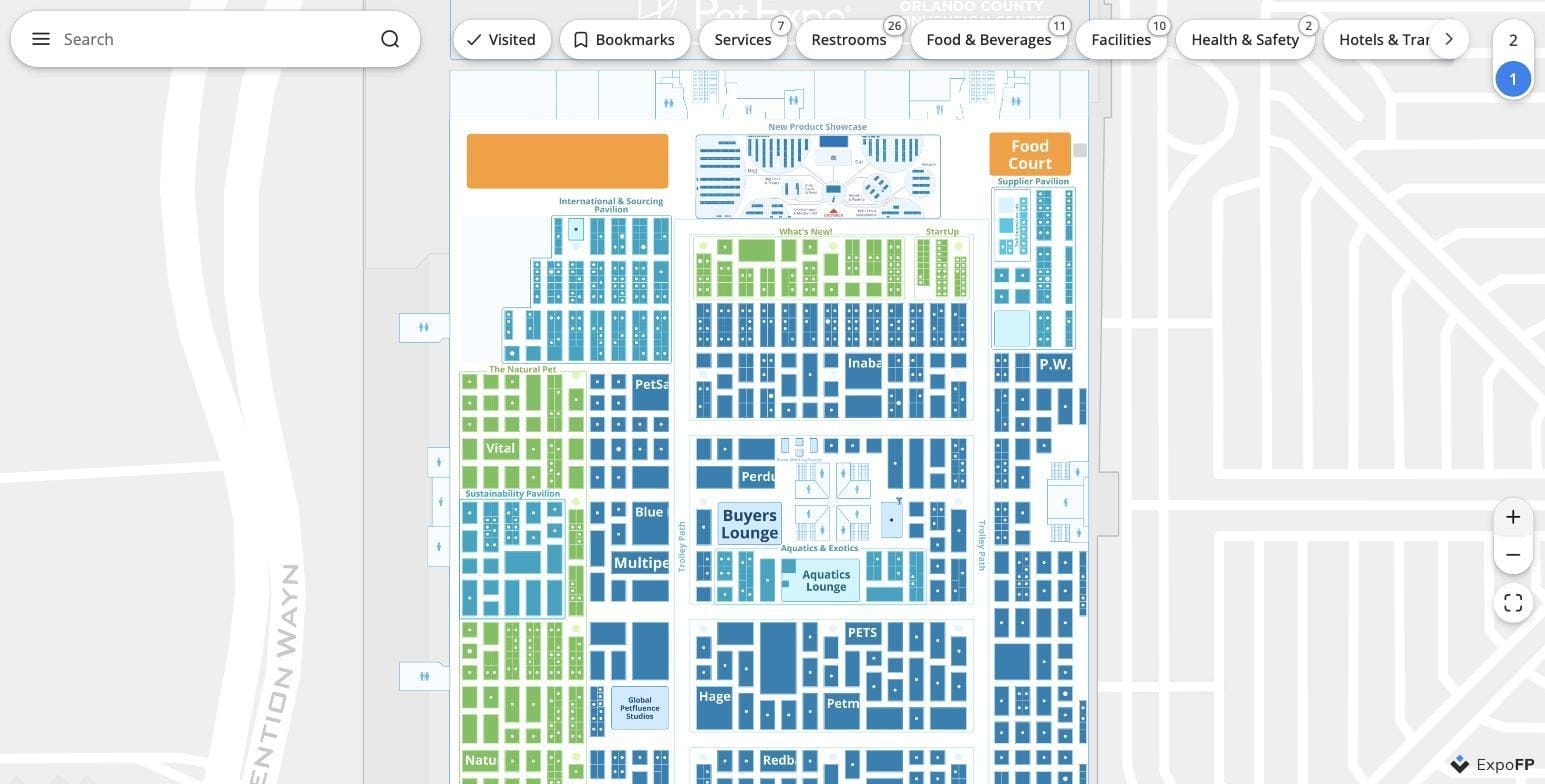
Global Pet Expo 2026 at the Orange County Convention Center in Orlando includes themed areas such as The Natural Pet, Sustainability Pavilion, What’s New!, StartUp, and International & Sourcing.
If your event has similar areas, explain what each one is for and who can exhibit there.
It can also be helpful to show important locations such as theaters, lounges, food areas, registration, and entrances. This helps exhibitors understand where a booth is located before booking it.
5. Booth options, sizes and pricing
Make your booth pricing easy to understand.
State the pricing basis, such as per sq ft in the US or per m² in Europe, available booth sizes, premiums for different booth types, and what is included.
| Booth type | Size | US price | EU price | Includes |
|---|---|---|---|---|
| Inline | 10×10 ft (100 sq ft) / 3×3 m (9 m²) | $X per sq ft | €X per m² space-only; €Y per m² shell scheme | Pipe & drape or shell scheme, ID sign, listing |
| Corner | 10×10 ft / 3×3 m, two open sides | + corner premium | + corner premium | As above |
| Peninsula | 20×20 ft (400 sq ft) / 6×6 m (36 m²), three open sides | $X per sq ft | €X per m² | Space only |
| Island | 20×20 ft and up / 6×6 m and up | $X per sq ft | €X per m² | Space only |
| Pavilion package | Turnkey 6 ft table or 4 m² kiosk | Flat fee | Flat fee | Furniture, graphics, power |
Also explain any costs that are not included, such as electrical service, internet, drayage or material handling, carpet, insurance, waste, or cleaning fees.
For more information, see our guides to booth sizes and dimensions in the US and Europe, booth types explained, and how to price exhibit space.
6. Sponsorship and promotional opportunities
If you offer sponsorships, include them in the exhibitor prospectus as well.
Show each sponsorship package, its price, what is included, and how many are available.
You can also include individual sponsorship opportunities such as:
- Lounges
- Theaters
- Lanyards
- Aisle signs
- “You Are Here” kiosks
- Floor plan placements
- App banners
- Session sponsorships
For limited opportunities, show how many are available, such as “Limited to 1” or “4 available.”
Digital sponsorship opportunities can also be included, such as sponsored placements on the interactive floor plan, featured listings, and category sponsorships.
See Event sponsorship packages: ideas, tiers and pricing examples for more ideas.
7. What exhibitors receive
Create one clear list showing what is included with an exhibitor’s booking.
Depending on your event, this may include:
- Exhibitor badges
- Online exhibitor directory listing
- Floor plan listing
- Lead retrieval
- Invitations for clients
- Marketing toolkit
- Exhibitor portal access
- Priority booking for the next edition
Make it clear when something requires an additional fee rather than being included.
8. Marketing and attendee acquisition plan
Give exhibitors an overview of how you promote the event and attract attendees.
You can include information about your email audience, paid media channels, association and media partners, matchmaking, hosted-buyer programs, and promotional opportunities available to exhibitors.
Keep this section focused on information that helps exhibitors understand how you plan to attract their target audience.
9. Schedule and key deadlines
Put the main event dates and exhibitor deadlines in one place.
Include:
- Move-in and move-out
- Event hours
- Early-bird deadline
- Final booking deadline
- Payment schedule
- Cancellation and downsizing policies
- Exhibitor manual release date
A simple timeline can make this information easier to follow.
Organizers working with a longer planning cycle can also use their planning checklist to organize these dates.
10. Rules and regulations summary
You don’t have to include the entire exhibitor manual in your prospectus.
Instead, summarize the rules exhibitors are most likely to need before booking, such as booth height limits, line-of-sight rules, hanging sign rules, sound restrictions, insurance requirements, and subletting policies.
Then direct exhibitors to the full exhibitor manual or venue regulations for more detailed information.
11. How to book
Keep the booking process simple and explain each step.
For example:
- Choose an available booth on the live floor plan.
- Submit the online application or contract.
- Receive confirmation and invoice.
If exhibitors can select and book booths directly from your floor plan, include the booking link here.
12. Contacts
Include contact details for the people responsible for exhibitor and sponsorship sales.
If your sales team is divided by region or sector, make it clear who exhibitors should contact.
Whenever possible, provide a name, direct email address, and phone number rather than only a general sales inbox.
Prospectus formats: PDF, web page or both?
There isn’t one format that works for every event.
| Format | Pros | Cons | Best for |
|---|---|---|---|
| Easy to forward, save, and print | Pricing and availability can become outdated | Approvers and procurement | |
| Web page | Easy to keep current and track | Less convenient to forward | Exhibit managers and on-site rebooking |
| Interactive floor plan + short PDF | Combines live availability and booking with a printable summary | Requires the floor plan to be public | Events selling booth space online |
For many events, a combination works well: a short PDF or landing page with the main information and an interactive floor plan showing current booth availability and pricing.
Example: how a large European show presents its floor plan
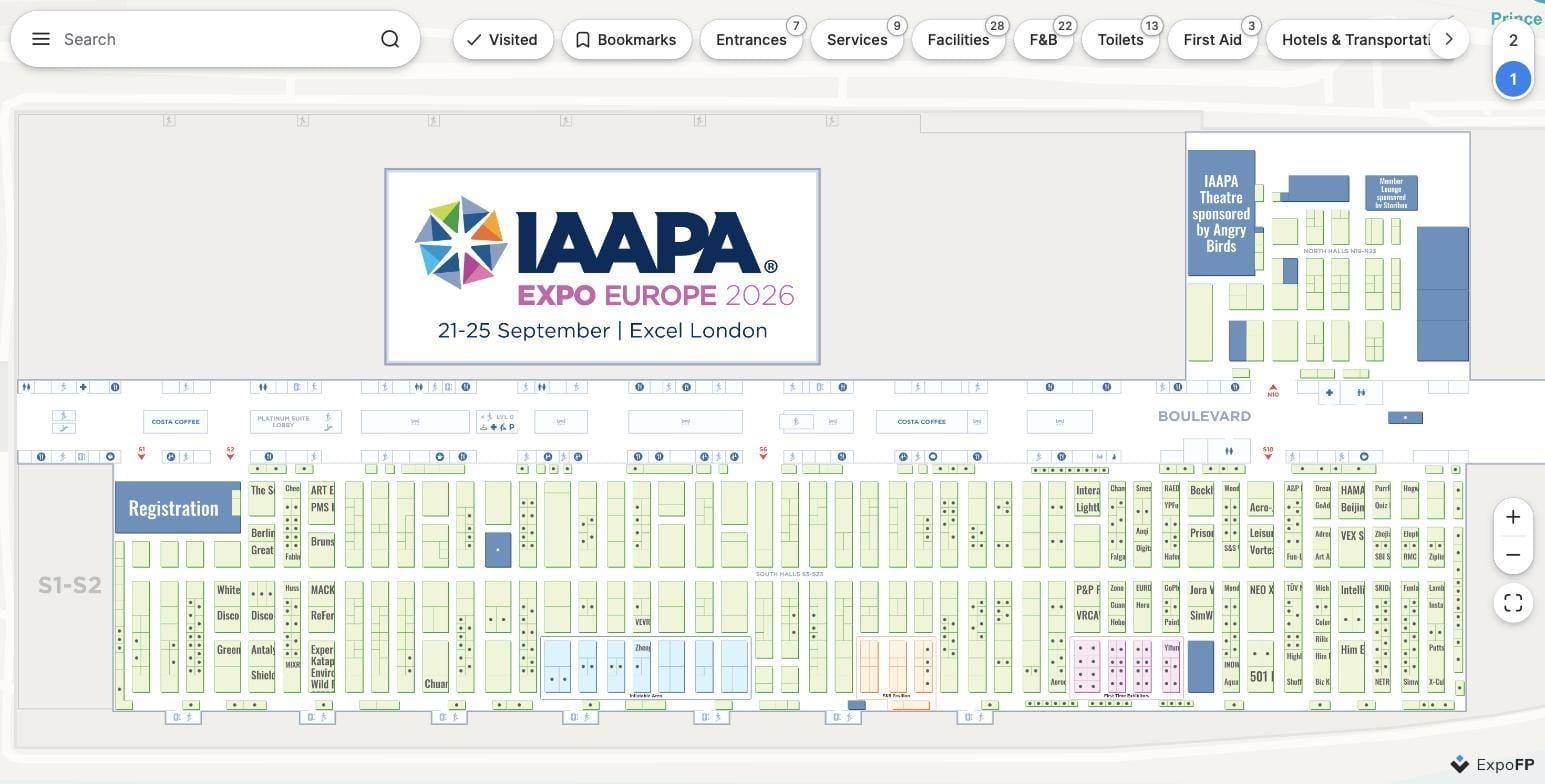
The IAAPA Expo Europe 2026 floor plan at ExCeL London shows registration, the Boulevard, IAAPA Theatre, Member Lounge, North and South halls, and first-time exhibitor and pavilion areas.
A prospectus for an event with this type of layout can explain the different halls and special areas while allowing the interactive floor plan to show exactly where individual booths are located.
This keeps the prospectus focused on the information exhibitors need without trying to reproduce all floor plan details in the document.
Common mistakes in exhibitor prospectuses
Attendance numbers without context.
Specify whether the number refers to registrations, verified attendees, professional attendees, or another measurement.
Using only a static floor plan.
Add a link to the live floor plan so exhibitors can check current booth availability.
Leaving required fees out of the pricing.
Clearly explain which costs are included and which may be charged separately.
Not showing sponsorship availability.
If a sponsorship opportunity is limited, show how many are available.
Leaving out important deadlines.
Make early-bird and final booking deadlines easy to find.
Using generic testimonials.
Include the exhibitor’s name and company whenever possible.
Forgetting digital sponsorship opportunities.
Floor plan sponsorships, featured listings, and app placements can provide additional sponsorship inventory.
Free exhibitor prospectus template
Download our free, editable exhibitor prospectus template to create a professional document for your event. Customize it with your event details, booth pricing, sponsorship opportunities, key dates, and booking information.
Prospectus checklist before you send it
- ☐ Attendance figures are clearly defined and sourced
- ☐ Live floor plan link is included on the cover and in section 4
- ☐ Every price states the unit and what is included and excluded
- ☐ Every sponsorship item has an inventory count
- ☐ Early-bird and final deadlines are visible on page one
- ☐ Named contacts are included instead of only a generic inbox
- ☐ PDF and web versions contain the same information
- ☐ Pricing in the prospectus matches pricing on the floor plan
Put the floor plan at the center of your prospectus
Your exhibitor prospectus doesn’t have to contain every detail about every available booth.
An interactive floor plan can provide current booth availability, zone information, exhibitor details, sponsorship placements, and direct booking from one place. Your prospectus can then focus on explaining the event, audience, pricing, and opportunities available to exhibitors.
ExpoFP floor plans for events such as Global Pet Expo and IAAPA Expo Europe are public, so organizers can see how this works before creating their own.
Create your floor plan free, publish it, and add the link to the first page of your next exhibitor prospectus.
FAQ
What is an exhibitor prospectus?
An exhibitor prospectus is a sales document created by an event organizer for potential exhibitors and sponsors. It usually includes information about the audience, floor plan, booth options and pricing, sponsorship opportunities, deadlines, and booking process.
How long should an exhibitor prospectus be?
An exhibitor prospectus is typically 6–12 pages as a PDF or can be published as a single web page. If you use an interactive floor plan for live availability, zoning, and pricing, the prospectus itself can be shorter.
What’s the difference between an exhibitor prospectus and a sponsorship prospectus?
An exhibitor prospectus focuses mainly on booth space, pricing, and what exhibitors receive. A sponsorship prospectus focuses on sponsorship packages and promotional opportunities.
Many organizers combine both because the same companies may purchase booth space and sponsorships.
When should the prospectus be published?
For annual B2B events, the exhibitor prospectus is typically published 10–12 months before the event. This can also be timed with on-site rebooking so returning exhibitors can reserve space for the next edition. See our 18-month planning timeline.
Should prices be in the prospectus or shared on request?
Including pricing in your exhibitor prospectus makes it easier for potential exhibitors to evaluate the event and request budget approval.
Show the pricing basis, premiums, what is included, and any additional fees. Your live floor plan can then remain the source of current booth-level pricing.
Sources: CEIR 2026 Marketing Spend Decision Report via Trade Show Executive; Trade show industry statistics 2026.