
Trade Show Planning: 18-Month Checklist and Timeline
A trade show planning checklist breaks a full event build into fixed milestones — typically starting 18 months out with venue and budget decisions, moving through exhibitor sales and marketing at the 12-to-6-month mark, and finishing with logistics, staffing and floor plan finalization in the final weeks before show day. Large annual expos with hundreds of exhibitors need the full 18-month runway; smaller regional shows can compress the same checklist into 6–9 months. Below is the full timeline, plus a copyable template you can adapt to your own show.
Every phase links back to one thing: your floor plan. It’s the document that ties together venue capacity, exhibitor sales, sponsorship inventory, and on-site navigation, so several milestones below point back to building and selling it. If you’re starting from zero, our step-by-step guide to creating a trade show floor plan is the companion piece to this checklist.
How to use this timeline
Not every show needs 18 months. Use this as a maximum runway and compress phases proportionally for smaller or annual repeat events — a show you’ve run for five years doesn’t need 18 months to pick a venue you already have under contract. Treat the month markers as “no later than,” not as fixed deadlines that apply identically to every event.
18–15 months before: venue, budget and dates
This phase is about locking the three variables everything else depends on.
- ☐ Confirm event dates and back-up dates, checking against major competing shows in your industry and category
- ☐ Shortlist and site-visit venues; confirm hall capacity, ceiling height, loading dock access and column locations
- ☐ Sign venue contract and confirm hall square footage in both ft² and m² if you expect international exhibitors
- ☐ Set a draft budget: venue rental, general contractor/production, marketing, staffing, technology (registration, floor plan, badge scanning)
- ☐ Define your show’s positioning: industry focus, target attendee profile, and what makes it different from competing events
15–12 months before: floor plan skeleton and sponsorship structure
Once the venue is locked, you can draft the floor plan skeleton — halls, stages, aisle grid — even before individual booths are sold.
- ☐ Draft the floor plan skeleton: hall boundaries, aisle grid, stage and amenity zones
- ☐ Define booth types and sizes you’ll offer (inline, corner, peninsula, island) in both imperial and metric dimensions
- ☐ Set booth pricing tiers and sponsorship package levels
- ☐ Decide whether booths will be sold via spreadsheet and email, or through a self-service online floor plan — see our comparison of both approaches in how to sell booth space online
- ☐ Build or update your interactive floor plan so it’s ready before outreach begins — read what an interactive floor plan is and why it matters if this is new to your team
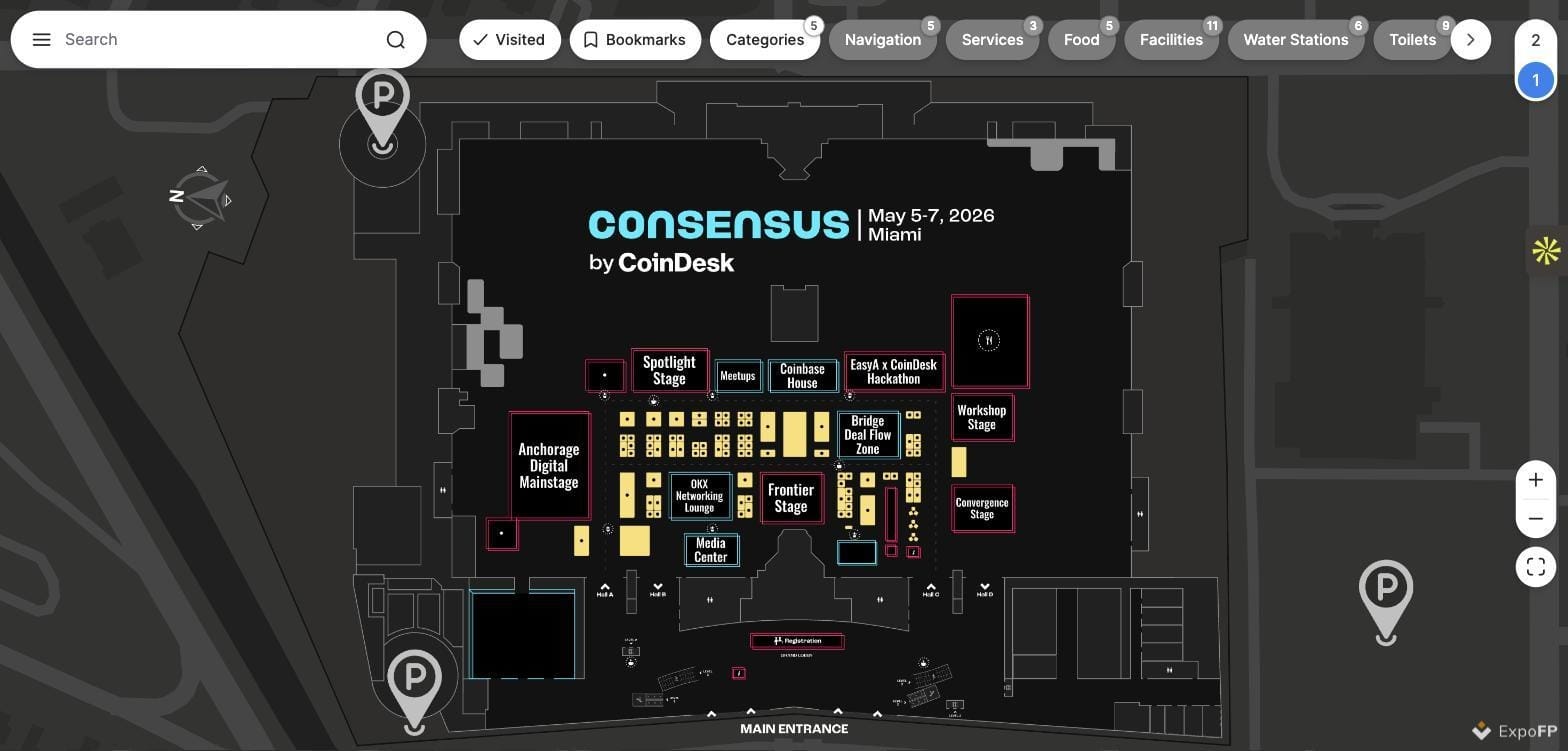
Large annual expos with hundreds of exhibitors often start booth sales a full year out. IMEX Frankfurt, for example, maintains its interactive floor plan on ExpoFP year over year as part of a multi-year partnership, which lets returning exhibitors rebook their same booth location before the plan is even publicly promoted.
12–9 months before: open booth sales and exhibitor marketing
- ☐ Open booth sales to past exhibitors first (early renewal window), then to the general market
- ☐ Publish exhibitor prospectus with pricing, benefits, deadlines and floor plan link
- ☐ Launch exhibitor-facing marketing: email sequences, past-attendee lists, industry association partnerships
- ☐ Start sponsorship sales conversations for premium placements (stage naming, lounge sponsorship, entrance banners)
- ☐ Set up exhibitor onboarding: contracts, insurance requirements, booth specifications, deadlines calendar
9–6 months before: attendee marketing and speaker program
- ☐ Launch attendee registration
- ☐ Confirm keynote speakers and session tracks
- ☐ Start attendee marketing: paid, organic, partner co-marketing, industry press
- ☐ Finalize AV, staging and production vendor contracts
- ☐ Review booth sales pace against the sales plan; adjust pricing or marketing push if behind target
- ☐ Update the floor plan as booths sell, keeping exhibitor names and booth numbers current so prospectus and marketing materials stay accurate
6–3 months before: logistics, staffing and floor plan lock
This is where the floor plan moves from a sales tool to an operational document.
- ☐ Finalize floor plan layout — no more structural changes to aisles, stages, or hall boundaries after this point
- ☐ Confirm booth assignments for all sold inventory; resolve any placement disputes
- ☐ Order signage, badges, lanyards and directional wayfinding materials — see our complete guide to event wayfinding for signage and digital map planning
- ☐ Hire and schedule on-site staff: registration, floor management, AV support, security
- ☐ Confirm F&B, security, and cleaning contracts with the venue
- ☐ Send exhibitor kit: move-in/move-out schedule, booth specs, shipping instructions, parking info
- ☐ Test attendee-facing tools: registration flow, mobile app or web map, badge scanning
3–1 months before: final push
- ☐ Send final attendee marketing push (last-chance registration, agenda highlights)
- ☐ Confirm final exhibitor list and publish it on the website and floor plan
- ☐ Print or finalize digital signage and wayfinding assets
- ☐ Conduct a walkthrough or site visit to confirm move-in logistics with the general contractor
- ☐ Brief on-site staff on floor plan, emergency procedures and daily schedule
- ☐ Confirm badge printing and registration desk setup plan
Move-in week and show days
- ☐ Oversee exhibitor move-in against the published schedule
- ☐ Walk the completed floor to confirm it matches the approved plan — check aisle widths, sightlines and emergency exits are clear
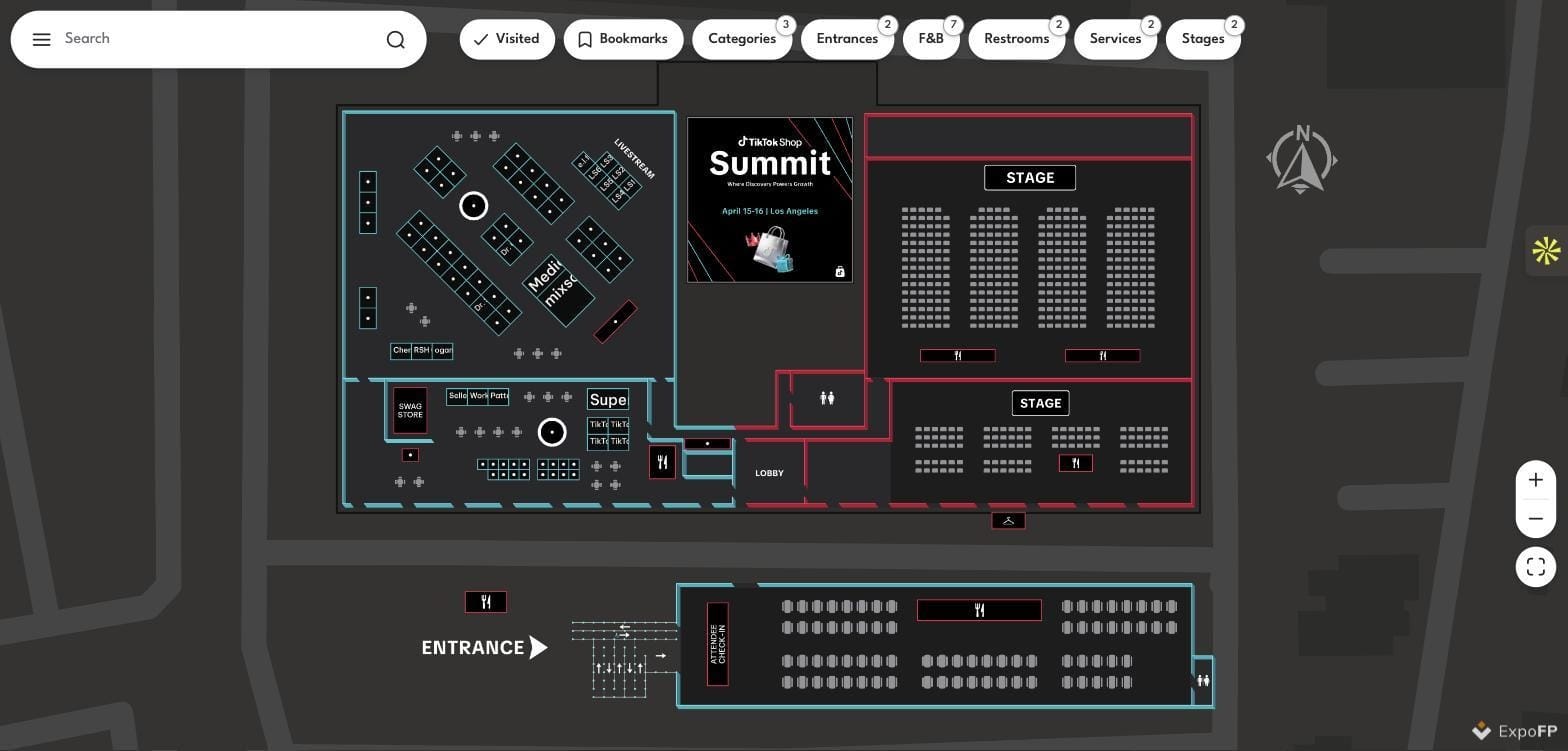
- ☐ Brief floor staff on wayfinding, lost-and-found, and how to help attendees use the interactive map
- ☐ Monitor attendee flow during show hours; note any traffic bottlenecks for next year’s layout
- ☐ Confirm exhibitor move-out schedule and timing with the venue and general contractor
Post-show (within 30 days)
- ☐ Send exhibitor and attendee post-show surveys
- ☐ Review floor plan analytics if available — which booths, categories or areas got the most attendee searches and views
- ☐ Debrief with the team on what worked and what to change in the layout
- ☐ Archive the floor plan and exhibitor list for next year’s renewal outreach
- ☐ Close out budget: actuals vs. plan, by category
Trade show planning timeline at a glance
FAQ
How far in advance should you start planning a trade show? Large annual expos with hundreds of exhibitors typically start 18 months out, mainly to lock venue and dates early and give exhibitor sales a long runway. Smaller or repeat regional shows can compress the same checklist into 6–9 months.
What’s the most common trade show planning mistake? Leaving the floor plan as a static PDF that never updates as booths sell, so exhibitors, sponsors and marketing materials are working from different versions of “what the floor looks like.” Keeping one live, interactive floor plan as the single source of truth avoids this.
When should the floor plan layout be finalized? Most organizers lock the structural layout — hall boundaries, aisle grid, stage placement — around 6 months out, even if individual booth assignments continue to fill in closer to the show.
Do I need floor plan software, or can I plan with spreadsheets? Spreadsheets work for very small shows, but they break down once you’re tracking booth status, exhibitor profiles, and sponsorship inventory at the same time. See our breakdown of selling booth space online vs. spreadsheets for where the tipping point usually is.
How much does trade show floor plan software cost? Pricing depends on show size, number of booths, and which features (online booth sales, exhibitor self-service, analytics) you need. See current ExpoFP pricing or browse venue examples to compare against shows similar in size to yours.
Use this checklist as your working document, and pair it with a floor plan you can start drafting today. Create your floor plan free — no credit card required to start.