
How to Attract Visitors to Your Trade Show Booth: 21 Ideas
Discover 21 practical ways to attract more visitors to your trade show booth, from pre-show promotion and booth design to demos, giveaways, technology, and follow-up.
Getting more visitors to your trade show booth starts before the doors open.
Pre-show promotion can help attendees know where to find you, while good booth design makes your space easier to notice from the aisle. Once they arrive, demos, giveaways, interactive displays, and a well-prepared team can give them a reason to stop and stay.
Below are 21 practical trade show booth ideas to help attract more visitors, increase engagement, and turn booth traffic into useful conversations and leads.
Trade show traffic matters because attendees are often there with a purpose. Many are researching products, meeting suppliers, comparing options, or making purchasing decisions.
For a broader look at attendee behavior and the exhibition industry, see our trade show industry statistics.
Before the show: 5 ways to attract visitors in advance
A successful trade show booth doesn't have to rely entirely on people discovering it while walking the floor. Give attendees a reason to look for you before the event begins.
1. Promote your exact booth number
Instead of simply posting "Come see us at the show," tell attendees exactly where they can find you.
Include your booth number in social posts, emails, event announcements, and meeting invitations. If the event has an interactive floor plan, you can also link directly to your booth or exhibitor listing.
This gives attendees a specific destination they can find when planning their visit.
2. Send personalized meeting invitations
If you have access to a pre-show attendee or exhibitor list, identify the companies or contacts you'd most like to meet.
Rather than waiting for them to walk past your booth, invite them to a specific meeting or demo time.
Even a small number of scheduled meetings can give your team a useful starting point for the day.
3. Promote something happening at a specific time
Give attendees a reason to visit your booth at a particular moment.
For example:
- Live product demo at 11:00 AM
- Product launch at 2:00 PM
- Giveaway for the first 50 visitors
- Short presentation every hour
A scheduled activity is easier for attendees to add to their event plans than a general invitation to "stop by."
4. Complete your exhibitor profile and floor plan listing
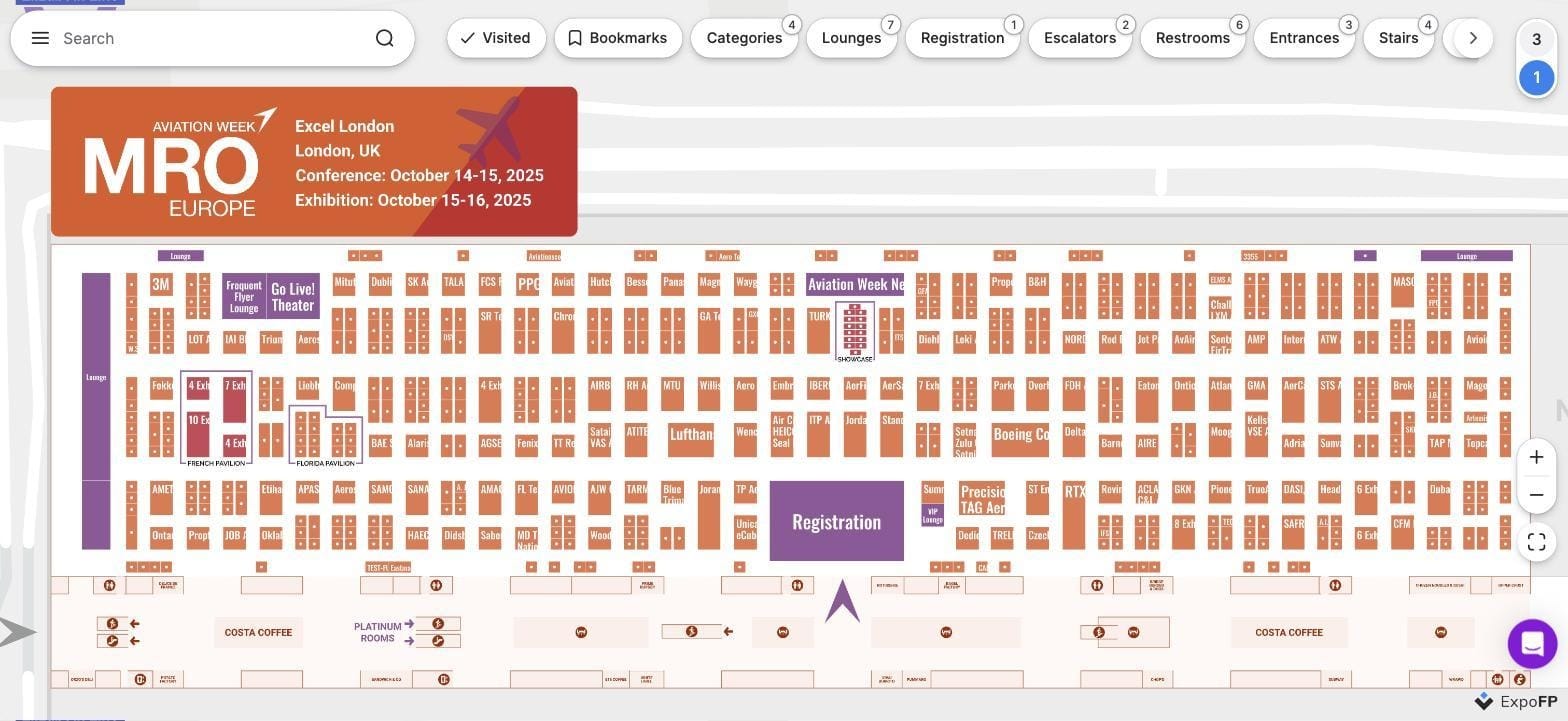
Attendees may search the event directory by company name, category, product, or service before deciding which booths to visit.
Make sure your exhibitor listing includes the correct company name, logo, description, categories, and other information supported by the event platform.
On an interactive floor plan, this can make it easier for attendees to discover your company and navigate directly to your booth.
5. Consider sponsorship and booth placement
Booth location can affect how many attendees naturally pass your space.
Areas near entrances, registration desks, food and beverage stations, presentation areas, and major aisles may receive more traffic.
Some events include premium booth locations or additional signage as part of sponsorship packages. If you're considering one, our guide to event sponsorship packages explains common sponsorship ideas, tiers, and pricing models.
Booth design and layout: 5 ways to get noticed
Once attendees are on the exhibition floor, your booth has only a short amount of time to catch their attention.
Good booth design isn't necessarily about having the biggest stand. Visibility, accessibility, and a clear message can make just as much difference.
6. Keep the booth open and accessible
Avoid creating unnecessary physical barriers between the aisle and your booth.
Depending on the floor plan, exhibitors may have an inline, corner, peninsula, or island booth, each offering different levels of visibility and aisle access.
If you're deciding between layouts, see our guide to trade show booth types.
7. Put your main message where attendees can see it
Your most important visual shouldn't be hidden at the back of the booth.
Place your company name, main message, or strongest visual where attendees can understand it while approaching from the aisle.
Keep text simple enough to read without requiring someone to stop directly in front of the booth.
8. Avoid using tables as barriers
A large table across the front of a booth can unintentionally make the space feel closed.
When possible, move tables, chairs, and demo stations further inside the booth and leave an open path from the aisle.
This makes it easier for attendees to enter naturally and explore.
9. Use lighting, height, and contrast
Exhibition halls can contain hundreds of visually similar booths.
Lighting, contrasting colors, overhead signage, displays, and vertical elements can help create a recognizable space without filling every available surface.
The goal is to make the booth easy to identify from the aisle.
10. Make your booth number easy to see
Attendees shouldn't have to walk into a booth just to check whether they've found the right one.
Keep your company name and booth number visible from the aisle, particularly at large events with multiple halls or zones.
Organizers can also make navigation easier by using a consistent numbering structure. Our guide to booth numbering systems explains common approaches.
On the show floor: 6 ways to give attendees a reason to stop
Getting noticed is only the first step. Once someone approaches the booth, there needs to be something that encourages them to stay.
11. Run short live demos
Instead of waiting for attendees to request a demonstration, schedule short demos throughout the day.
A 10-minute demo every hour, for example, gives attendees a predictable time to visit and can naturally create a small audience around the booth.
Post the schedule both at your booth and through your pre-show communication channels.
12. Participate in a scavenger hunt or passport program
Scavenger hunts and exhibitor passport programs encourage attendees to visit multiple booths around the show floor.
Some organizers manage these activities through an event app, interactive map, or QR codes.
If the organizer doesn't offer one, a group of complementary exhibitors can also create a smaller activity together.
For ideas on using QR codes around an event, see our QR code wayfinding guide.
13. Choose giveaways people can actually use
A giveaway doesn't have to be expensive to be memorable.
Product samples, small tools, useful accessories, or items connected to your industry can work better than generic promotional merchandise.
Ideally, the giveaway should also have some connection to what your company does.
14. Connect giveaways with lead capture
If you're running a raffle or larger giveaway, consider connecting entry to a badge scan or simple registration form.
This allows your team to follow up after the event rather than treating the giveaway only as a way to increase booth traffic.
Be clear about what information you're collecting and how it will be used.
15. Put interactive elements where people can see them
If your booth includes an interactive display, working product, touchscreen, demonstration, or other visual element, don't hide it at the back.
Position it where people walking down the aisle can see what's happening.
Movement and interaction can attract attention before attendees have consciously decided to stop.
16. Work with nearby exhibitors
Neighboring exhibitors don't always have to compete for the same traffic.
Companies serving complementary markets can cross-promote each other's booths, organize a joint giveaway, or host a small shared activity.
This can introduce both exhibitors to attendees who might otherwise have walked past.
Technology: 3 ways to improve booth engagement
Technology doesn't have to dominate the booth. Used well, it can make information easier to access and keep attendees engaged when staff members are busy.
17. Add a digital kiosk or touchscreen
A kiosk can give attendees a way to browse products, view videos, explore catalogs, or interact with a product configurator without waiting for a team member.
It can also provide useful self-service information during busy periods.
If you're considering digital signage or kiosks for an event, our trade show kiosk buyer's guide covers common options and considerations.
18. Make your exhibitor listing easy to find
Your physical booth isn't the only place attendees can discover you.
A complete exhibitor listing on the event's interactive floor plan can help visitors search for your company, identify your booth, and get directions across the venue.
Categories and accurate exhibitor information are especially useful for attendees who know what type of product they're looking for but haven't chosen a specific company yet.
19. Give QR codes a specific purpose
Avoid sending every QR code to your homepage.
Instead, link each one to something useful for the attendee, such as:
- A product specification sheet
- A meeting scheduler
- A demo video
- A digital catalog
- A product page
- Contact information
The destination should match what the attendee was doing when they scanned it.
Staff and follow-up: 2 ways to make booth traffic count
More visitors aren't particularly useful if your team doesn't turn those visits into conversations and follow-ups.
20. Start conversations with open questions
"Can I help you?" makes it easy for someone to say "No, thanks" and continue walking.
Instead, ask something related to the event, their role, or the reason they're exploring the show.
For example, asking what brought them to the event or what type of product they're researching gives them more room to start a conversation naturally.
Staff also need space to recognize when someone simply wants to browse.
21. Follow up while the event is still fresh
After the show, organize leads based on the conversations your team actually had.
A useful follow-up can reference the product discussed, a question the attendee asked, or the next step agreed at the booth.
Following up within 24–48 hours also keeps the conversation connected to the event while the interaction is still fresh.
Quick reference: trade show booth ideas by goal
| Goal | Ideas to focus on |
|---|---|
| Attract more aisle traffic | Open layout, visible signage, lighting and contrast (#6–10) |
| Turn visitors into leads | Giveaways with lead capture, kiosks, staff conversations (#14, #17, #20) |
| Bring targeted visitors to your booth | Personalized invitations, sponsorship placement, exhibitor listings (#2, #5, #18) |
| Keep attendees engaged longer | Live demos, interactive activities, kiosks (#11, #12, #17) |
FAQ
How can I attract more visitors to my trade show booth?
Combine promotion before the event with a booth that's easy to see and enter. Once attendees arrive, give them a clear reason to stop, such as a live demonstration, interactive display, useful giveaway, or scheduled activity.
Does booth location matter more than booth design?
Both can affect traffic in different ways.
A location near an entrance or major aisle may naturally receive more passersby, while booth design determines how noticeable and approachable your space is once those attendees are nearby.
If premium placement isn't available, clear signage, an open layout, and good pre-show promotion can help make up for lower natural traffic.
How can attendees find my booth if I don't have a corner or island location?
Make sure your booth number appears in your pre-show communication and that your exhibitor profile is complete in the event directory.
An interactive trade show floor plan can also allow attendees to search for your company and navigate to your location instead of relying on chance discovery while walking the aisles.
Should exhibitors focus only on attracting attendees?
This guide focuses on helping exhibitors attract visitors to their booths.
If you're an organizer looking to bring more companies to your event, see our separate guide on how to attract more exhibitors to your trade show.
How soon should I follow up with trade show leads?
A good target is within 24–48 hours after the event, particularly for attendees who requested information or discussed a specific next step.
Personalize the message around the conversation rather than sending the same generic follow-up to every scanned badge.
Help attendees find your exhibitors
Getting attendees to the right booth is easier when they can search the floor plan before and during the event.
With ExpoFP, organizers can create an interactive trade show floor plan where visitors can search for exhibitors, find booth locations, and navigate the show floor.
Create your floor plan free with ExpoFP and make your exhibitors easier to find.