Event Wayfinding Signage: A Practical Guide for Trade Shows and Conferences
Plan effective event wayfinding signage for trade shows and conferences. Explore sign types, placement, accessibility, and interactive floor plans.
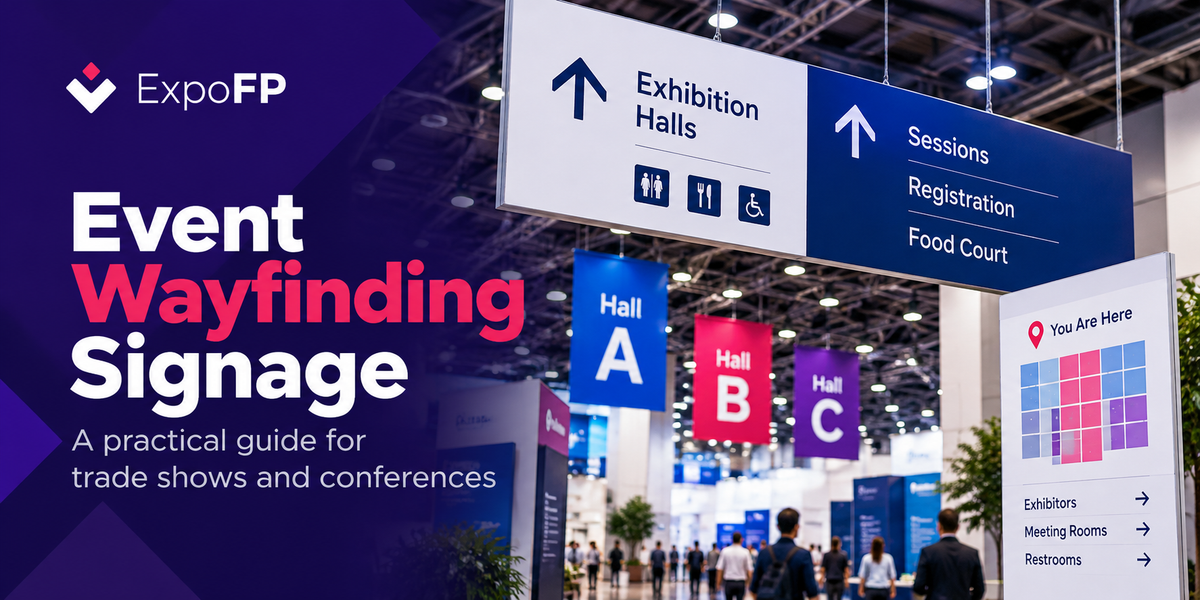
Good event wayfinding signage helps attendees find their way without stopping to ask for directions. Whether they're looking for a specific booth, a conference session, or the nearest exit, clear signs make navigating a busy venue easier.
For event organizers, effective signage is more than a collection of arrows and banners. It's a coordinated system that connects entrances, exhibition halls, aisles, and important destinations.
This guide covers the main types of event wayfinding signage, where to place them, how to make them accessible, and how to combine physical signs with interactive floor plans.
For a broader overview, see our guides to event wayfinding and QR code wayfinding.
The Three Levels of Event Wayfinding Signage
A good signage system uses different types of signs for different purposes. Organizing them into three levels helps attendees find information quickly without overwhelming them.
1. Primary Signage
Primary signs help attendees make major navigation decisions, such as finding the right exhibition hall, registration area, or exit.
These are typically the largest signs, mounted above crowds and visible from a distance. They usually include hall names, directional arrows, and sometimes sponsor branding.
2. Secondary Signage
Secondary signs guide attendees within a specific area.
Examples include aisle numbers, zone markers, session room directions, and registration lines. They are generally positioned at eye level or slightly higher.
For large trade shows, consistent aisle and zone numbering makes it easier to locate individual exhibitors.
3. Tertiary Signage
Tertiary signs provide information at specific locations.
These include booth numbers, room names, schedules, and "You Are Here" markers.
Each signage level serves a different purpose. Keeping information focused makes the entire system easier to understand.
Essential Types of Signage for Trade Shows and Conferences
Most events use a combination of six signage types:
- Directional signs: Arrows guiding attendees toward halls, entrances, exits, and other destinations.
- Identification signs: Labels identifying registration desks, meeting rooms, exhibition halls, and other spaces.
- Zone and aisle markers: Hanging signs or standing displays showing section names and booth numbering.
- Informational signs: Event maps, directories, schedules, and other useful information.
- Safety and accessibility signs: Emergency exits, accessible routes, and safety equipment locations. See our guide to fire safety and layout regulations.
- Sponsor signage: Branded banners and displays placed in prominent areas without interfering with navigation.
For multi-hall events, zone and aisle markers are particularly important. They help attendees identify their location even when individual booths are difficult to see through crowds.
Where to Place Event Wayfinding Signs
Even well-designed signs are ineffective when placed in the wrong locations.
The most useful rule is simple: place directional information before attendees reach a decision point.
For example, a sign directing visitors toward Hall B is more helpful before a corridor splits than directly at the intersection.
When planning signage placement:
- Position directional signs before intersections, escalators, and hall transitions.
- Repeat important directions after turns to confirm attendees are following the correct route.
- Mount overhead signs where they remain visible above crowds.
- Place event directories near entrances, registration areas, and other locations where attendees naturally stop.
- Include "You Are Here" maps at major entrances and along long corridors.
- Check visibility from the attendee's perspective before the event opens.
For larger venues, signs should also use the same hall names, zone letters, and booth numbers displayed on the event floor plan.
This consistency helps visitors move between physical signage and digital navigation without confusion.
How to Design Clear and Effective Event Signage
Good event signage prioritizes readability and consistency over decorative design.
Use Readable Typography
Choose clear fonts that are easy to recognize from a distance.
Sans-serif fonts are commonly used for directional signage because their simple letterforms work well on large displays.
Text size should reflect the expected viewing distance. A sign mounted high above an exhibition aisle needs significantly larger lettering than a booth identification sign.
Keep Colors Consistent
Color coding is especially useful at events with multiple halls or zones.
For example, an organizer might assign blue to Hall A, orange to Hall B, and green to Hall C.
Those colors can appear across physical signs, entrance banners, printed materials, and the interactive floor plan.
Using the same visual system throughout the venue helps attendees recognize their location more quickly.
Use Familiar Icons
Standard symbols for restrooms, food areas, parking, and accessibility can communicate information faster than long text labels.
Avoid introducing unfamiliar icons when widely recognized alternatives already exist.
Prioritize Contrast
Text needs to remain readable under different lighting conditions.
High contrast between text and background is generally more important than matching every element to the event's brand colors.
This is particularly important for directional, safety, and accessibility signage.
Accessibility Requirements for Event Signage
Accessible wayfinding helps all attendees navigate the venue independently.
In the United States, the Americans with Disabilities Act (ADA) establishes requirements for certain types of permanent signage, including tactile characters, Braille, and mounting locations.
Temporary event signage may be subject to different requirements, but accessibility should still be part of the planning process.
Important considerations include:
- Using readable text sizes and sufficient color contrast.
- Avoiding reflective materials that make signs difficult to read.
- Clearly identifying accessible entrances, elevators, restrooms, and routes.
- Combining colors with text or symbols rather than relying on color alone.
- Keeping directional information consistent throughout the venue.
Accessibility requirements vary by location, venue, and signage type. Organizers should confirm applicable standards with the venue and relevant local authorities before producing signs.
Choosing Materials for Event Signage
The right signage material depends on the event duration, budget, installation requirements, and whether the signs will be reused.
| Material | Common Uses |
|---|---|
| Fabric and vinyl banners | Hall entrances, hanging signs, aisle markers |
| Foam board and coroplast | Temporary directional and informational signs |
| Aluminum and acrylic | Reusable identification and directional signage |
| Digital displays | Registration areas, changing schedules, and interactive directories |
Digital displays are particularly useful when event information changes frequently.
For more information about display options, see our digital signage buyers guide.
Regardless of the material, organizers should schedule a signage walkthrough before opening day.
Walk through the venue using the same routes attendees will follow. Check whether signs are visible, directions are clear, and important destinations can be found without additional assistance.
Combining Physical Signage With Interactive Floor Plans
Physical signs and digital wayfinding work best when they complement each other.
Traditional signs provide immediate directions throughout the venue. They help attendees recognize halls, aisles, exits, and other important locations without opening a device.
An interactive event floor plan adds another level of navigation.
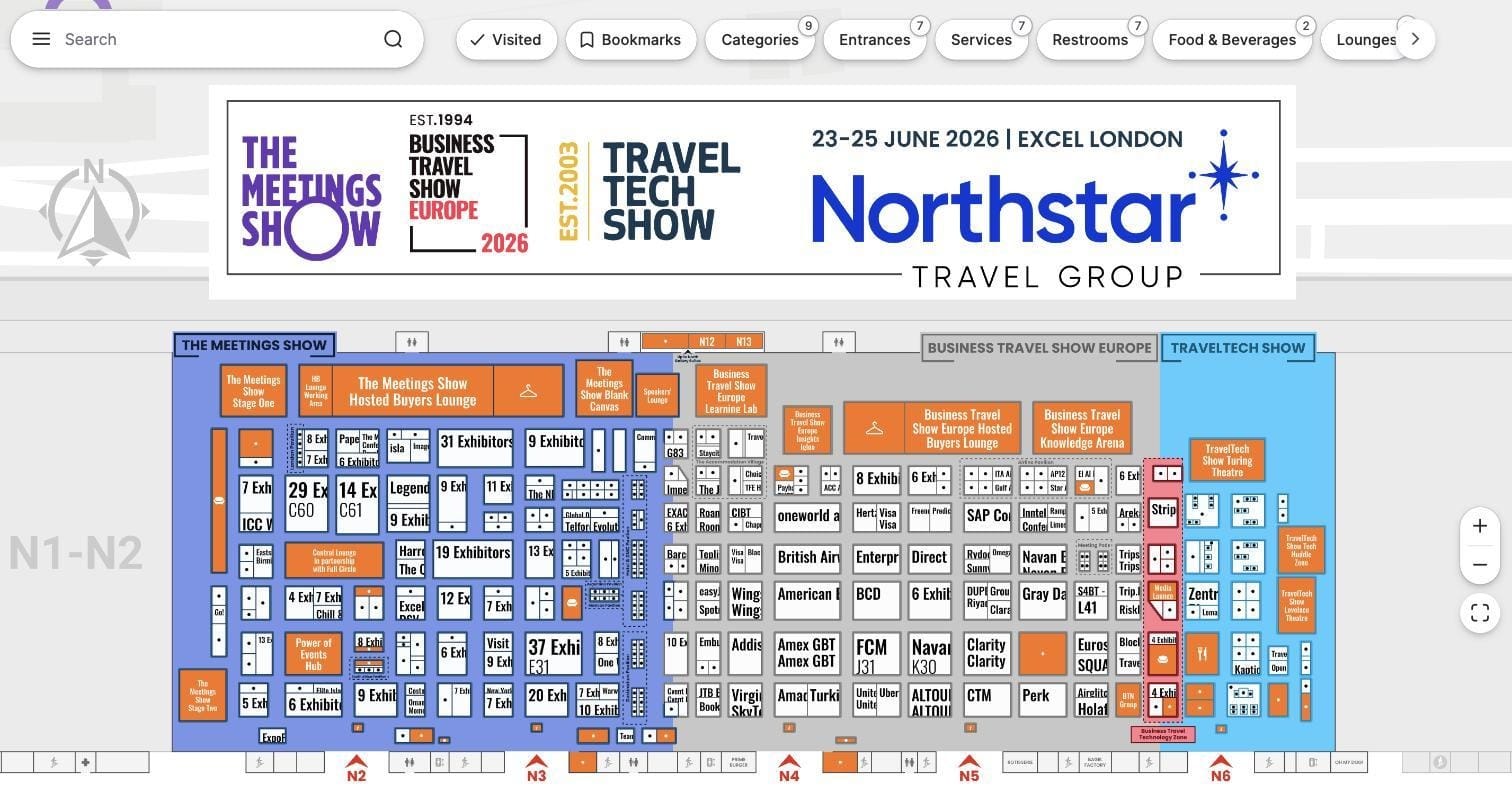
With a digital floor plan, attendees can search for exhibitors, locate specific booths, explore event areas, and access directions.
For organizers, the important part is keeping both systems consistent.
If a physical sign identifies a location as "Hall D, Aisle 1400," the digital map should use the same naming convention.
ExpoFP interactive floor plans can help organizers connect these elements through searchable exhibitor listings, booth numbers, points of interest, and wayfinding features.
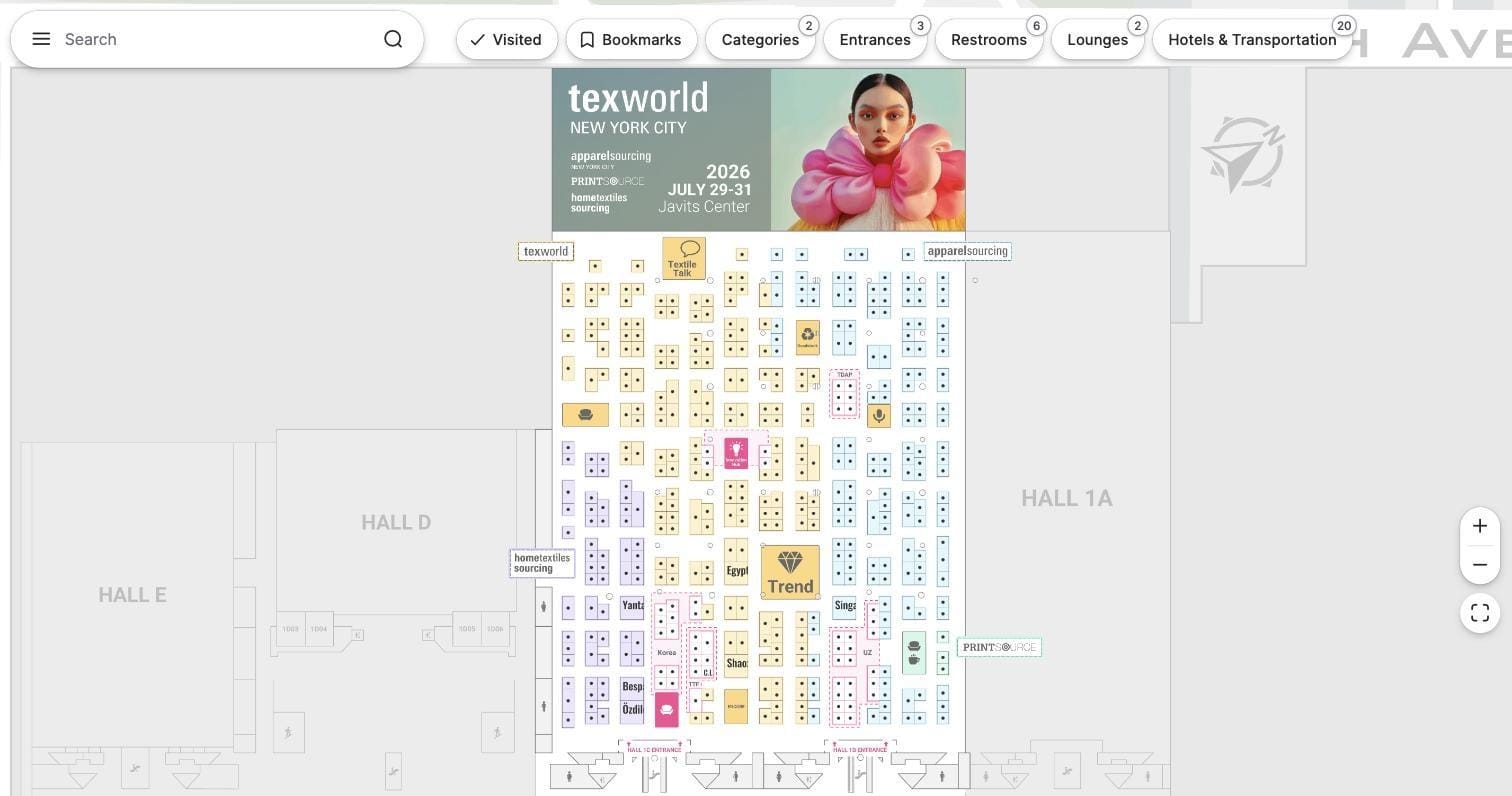
For more information about navigation options, explore our indoor navigation technology comparison.
It's also important to establish a consistent booth numbering system before finalizing signage. See our guide to booth numbering systems.
Event Signage Planning Checklist
Before sending signs to production, confirm that:
- Exhibition halls, zones, and aisles have consistent names.
- Directional signs cover major intersections and entrances.
- Booth numbers match the event floor plan.
- Accessible routes and facilities are clearly identified.
- Text and symbols are readable from their intended viewing distances.
- Physical signage and digital maps use the same location information.
- A final venue walkthrough is scheduled before opening.
Starting signage planning alongside floor plan preparation helps reduce last-minute changes and ensures that printed signs reflect the final event layout.
Frequently Asked Questions
How far in advance should event wayfinding signage be planned?
Ideally, start planning 60–90 days before the event, alongside floor plan finalization. This provides time to confirm hall names, aisle numbers, sign locations, production, and installation.
What is the difference between wayfinding and directional signage?
Wayfinding refers to the complete navigation system, including physical signs, maps, digital tools, and other visual information. Directional signage is one part of that system, using arrows and labels to guide attendees toward destinations.
Do small events need wayfinding signage?
Yes. Even a single-hall event benefits from clear entrance signs, booth numbering, and an event directory. Smaller venues generally require fewer signs and a simpler navigation system.
Should event signage follow sponsor branding or event branding?
Directional signage should remain consistent with the event's navigation system. Sponsor branding can be included on entrance banners and other prominent displays, provided it doesn't reduce readability or interfere with directions.
Can digital wayfinding replace physical signage?
Not entirely. Physical signs remain important for immediate navigation, safety, and accessibility. Digital floor plans complement them by allowing attendees to search for specific exhibitors, booths, and destinations.
Make Event Navigation Easier With ExpoFP
Effective event wayfinding starts with a clear floor plan and a consistent signage system.
When physical signs and digital maps use the same hall names, zone colors, and booth numbers, attendees can navigate the venue more easily.
With ExpoFP, organizers can create interactive floor plans that help visitors find exhibitors, explore event areas, and get directions.